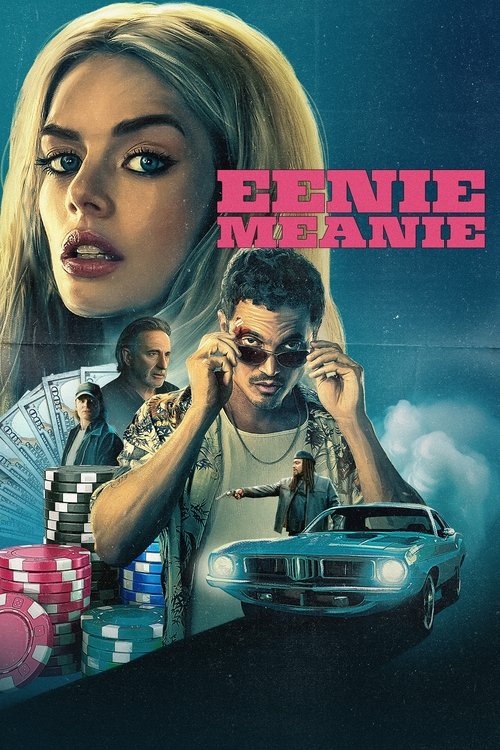
Eenie Meanie
Plot
A former teenage getaway driver gets dragged back into her unsavory past when a former employer offers her a chance to save the life of her chronically unreliable ex-boyfriend.
Get the Weekly Woke Watchlist
New and trending movies scored for woke bias, preachy messaging, and forced political themes — before you waste your evening.
No spam. One useful email per week.
Overall Series Review
Categorical Breakdown
The film's focus is on personal agency and breaking a cycle of generational poverty and crime, rather than race or intersectional class commentary. Characters are judged purely by their merits or incompetence within the criminal underworld, not by immutable characteristics.
The central dramatic arc is a pursuit of the American Dream, where the protagonist actively rejects her criminal heritage and impoverished past, defined by 'drug addicted parents,' to achieve a stable, middle-class life, represented by an affluent home and nuclear family structure. The narrative frames this traditional life as the positive end goal.
The main character, Edie, is presented as flawless, competent, and a brilliant driver who is constantly bailing out the male love interest, John, who is a complete failure and 'dirtbag.' This setup strongly pushes the 'Girl Boss' trope by making the female lead superior in every respect while emasculating her male counterpart. However, the story ends with her choosing motherhood and a family over her career, which works against the typical anti-natalist message.
The narrative centers entirely on a traditional heterosexual pairing that results in an accidental pregnancy. The dramatic conclusion celebrates the establishment of a traditional nuclear family, with no presence of alternative sexualities or gender ideology being lectured or centered in the plot.
The film is a violent heist-comedy that operates largely in a moral vacuum, where right and wrong are defined by legal/illegal actions rather than transcendent law. There is no explicit attack on religion or Christianity, but the overall moral framework is relativistic, focusing only on the transactional 'power dynamics' of the criminal world.
Get the Weekly Woke Watchlist
New and trending movies scored for woke bias, preachy messaging, and forced political themes — before you waste your evening.
No spam. One useful email per week.