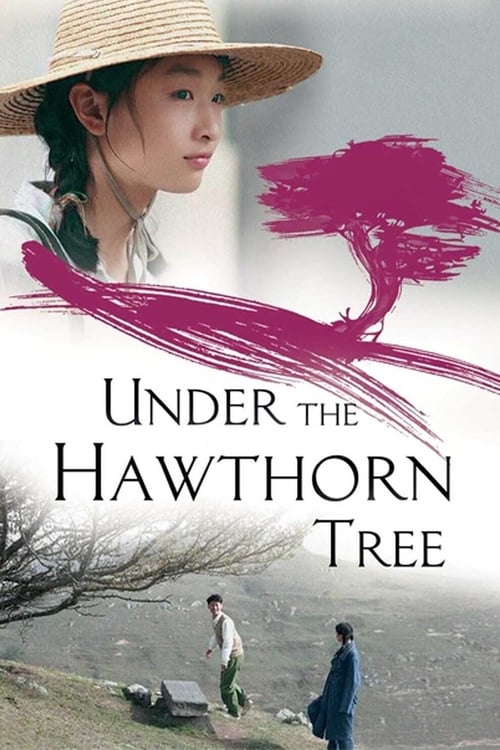
Under the Hawthorn Tree
Plot
The daughter of a right-winger, schoolgirl Jing Qiu is sent to the countryside for reeducation, and tasked to help write a textbook. There she meets Lao San, a young soldier with a bright future ahead. Despite the class divide and parental disapproval, romance blooms against turbulent times.
Get the Weekly Woke Watchlist
New and trending movies scored for woke bias, preachy messaging, and forced political themes — before you waste your evening.
No spam. One useful email per week.
Overall Series Review
Categorical Breakdown
The plot's primary obstacle is the state-enforced hierarchy of political class, as the female lead’s father is a political prisoner, which directly threatens her future and her relationship. This system itself is an attack on meritocracy. The narrative does not utilize an intersectional lens based on race or immutable characteristics; instead, it advocates for universal human merit (pure love and fidelity) over political identity. The film is a critique of the real-world historical system that judges people by their familial political background.
The setting is the Cultural Revolution, a period of immense political turmoil and cultural destruction. The story and its themes are a lament for the suffering caused by that specific totalitarian ideology, not an attack on Chinese civilization or ancestors. The narrative champions the traditional Chinese value of enduring love and personal integrity, positioning these values as a bulwark against ideological chaos and the erasure of historical memory, which is an expression of cultural loyalty and gratitude.
The core relationship models a distinct but complementary dynamic, emphasizing chaste, pure love. The male lead, Lao San, is consistently depicted as a responsible, honorable, and quietly protective figure who respects the female lead’s innocence and boundaries. The plot includes no 'Girl Boss' tropes or emasculation. The mother figure, despite her political persecution, works tirelessly to support her children, validating the role of family and maternal devotion.
The entire story revolves around a deeply committed, chaste, and tragic heterosexual romance between a man and a woman. The narrative firmly operates within a normative structure where the traditional pairing and family unit are the aspirational standard for the characters. No alternative sexualities, gender ideology, or deconstruction of the nuclear family are present in the film's themes or plot.
The movie does not express hostility toward religion. Its central theme of transcendent, sacrificial love and unyielding fidelity in the face of political nihilism operates as a higher moral law that saves the characters from the spiritual vacuum of the revolutionary state. The narrative's focus on timeless human virtues directly opposes moral relativism, suggesting an objective truth in love and commitment.
Get the Weekly Woke Watchlist
New and trending movies scored for woke bias, preachy messaging, and forced political themes — before you waste your evening.
No spam. One useful email per week.