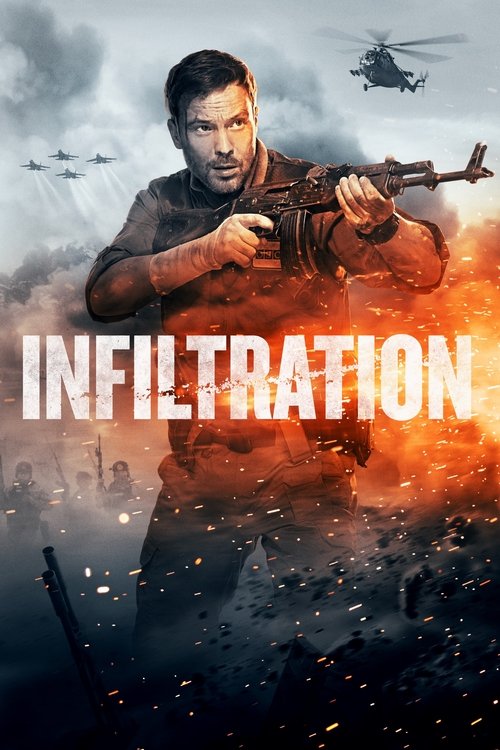
Infiltration
Plot
Ivan sets off on a dangerous mission into Syria to save his ex-commander Grey after his capture by ISIS. With the help of U.S. military patrols, he succeeds in freeing Grey and attempts to escape the country while being hunted by terrorists.
Get the Weekly Woke Watchlist
New and trending movies scored for woke bias, preachy messaging, and forced political themes — before you waste your evening.
No spam. One useful email per week.
Overall Series Review
Categorical Breakdown
Characters are judged entirely by their actions, bravery, and competence in a hostile environment, which reflects a meritocratic standard. The antagonist is a universally reviled terrorist group (ISIS), and the main characters are Russian soldiers. There is no element of 'race-swapping,' vilification of white males, or narrative focus on immutable characteristics to drive the plot, aligning with a Universal Meritocracy score.
The film explicitly explores themes of loyalty, survival, and post-war trauma from a distinctly Russian perspective, having been noted for its 'nationalist perspective on Russia's Syrian intervention'. The institutions of military loyalty and national duty are celebrated, and the narrative centers on a Russian hero's commitment to his commander, directly opposing the concept of Civilizational Self-Hatred.
The primary female character is Alyona Yermakova, the protagonist's wife, who is defined by her relationship to him and who leaves him due to his inability to stop 'playing' war. She is not a 'Girl Boss' or a Mary Sue figure leading the military action. The male characters are the ones undertaking the dangerous and competent mission. Her role exists to explore the main male protagonist's emotional conflict regarding duty versus family, but the messaging is not explicitly anti-natalist or emasculating.
As a military action drama set in the Syrian conflict, there is no evidence of queer theory or sexual ideology being centered in the plot. The normative structure of the film is traditional, focusing on a heterosexual main couple and the deep-seated, non-sexual bond between male soldiers (comradeship and loyalty).
The central conflict pits the heroic Russian soldier against the religious extremism of ISIS militants, which are depicted as the fundamental source of evil. This framework establishes a clear objective moral reality where the fight is against evil and for principles like loyalty and honor. There is no evidence of hostility toward traditional religion or an embrace of moral relativism in the narrative's structure.
Get the Weekly Woke Watchlist
New and trending movies scored for woke bias, preachy messaging, and forced political themes — before you waste your evening.
No spam. One useful email per week.