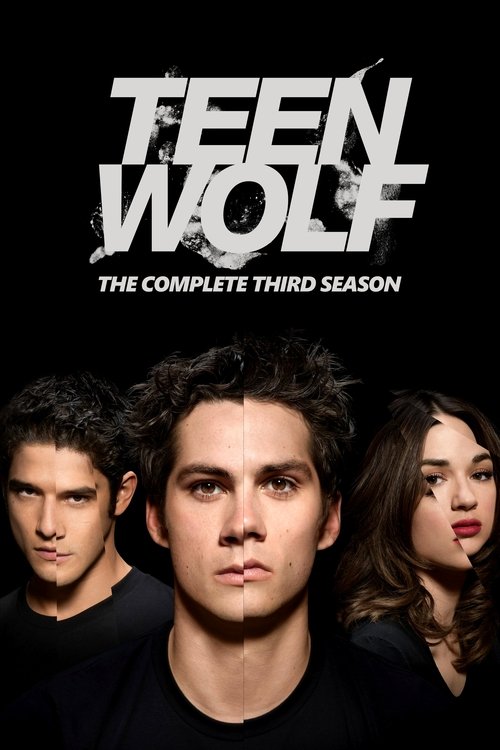
Teen Wolf
Season 3 Analysis
Season Overview
Four months after the events that nearly ended Jackson's life and resurrected Peter Hale's, teen wolf Scott McCall and his friends begin their junior year of high school unaware that the new threat has arrived in Beacon Hills: a pack of Alpha werewolves intent on bringing Derek into their fold, while destroying his young pack.
Season Review
Categorical Breakdown
The main protagonist, Scott McCall, is a non-white male, and a major new heroic character, Kira Yukimura, is an Asian female Kitsune. The ensemble cast includes multiple people of color in roles as heroes, villains, and authority figures, judging characters on merit rather than immutable traits. However, supernatural identity (Werewolf, Banshee, Kitsune) serves as a clear substitute for intersectional identity, creating a narrative where the ‘othered’ status is the source of all power, influence, and specialness. There is no explicit lecturing, but the narrative structure privileges this status.
The series does not explicitly demonize 'Western civilization' or the core community of Beacon Hills, as the town itself is seen as a home worth protecting. However, the season's primary villains, the Alpha Pack, and later the Nogitsune, are directly tied to ancient, non-Western mythologies (Greek/Druidic/Japanese Kitsune). Furthermore, the historical, generational 'Argent' hunter family, which represents a form of ancient, established Western heritage, is shown to be morally corrupted and a source of chaos and violence across generations. Institutions like the family unit (McCall, Stilinski) are consistently portrayed as protective shields against the chaos.
Female characters are consistently portrayed as highly intelligent, powerful, and central to the plot’s success. Lydia Martin transitions from a popular girl to a powerful Banshee who solves mysteries with her intellect and supernatural gift. Allison Argent is a skilled hunter who leads the strategic efforts of the group. The primary villain of the first half is the Darach/Jennifer Blake, a highly intelligent and powerful female Druid. However, this strength is not balanced by a celebration of complementarianism or motherhood; male characters are shown as supportive fathers and partners, but the most powerful women are defined by their singular, independent strength. The power dynamic shifts towards a 'girl boss' model where women are celebrated for transcending traditionally feminine roles, yet one analysis notes that female characters who embrace aggressive power (like Erica and Kali) are removed or killed off.
The season contains significant and normalized LGBTQ+ content. The relationship between an openly gay student, Danny Māhealani, and an Alpha werewolf, Ethan, is treated as a routine part of the social landscape with no surrounding conflict or judgment from the main, straight characters. The casual inclusion of this relationship without any 'coming out' drama positions the narrative in an 'orientation blind Utopia'. This aligns with a core principle of queer theory by centering an alternative sexual identity as normal and foundational to the world structure, rather than a private or secondary trait.
Organized Western religion, specifically Christianity, is completely absent from the narrative. The supernatural power structure is rooted entirely in ancient pagan/mythological beliefs (Druidism, Greek myth, Kitsune/Japanese myth). The closest thing to a religious figure is Dr. Deaton, the emissary, who is a modern-day Druid. The complete spiritual vacuum of traditional Western faith, replaced by a focus on pagan and Eastern mysticisms, implies that any transcendent moral law comes from these ancient and magical sources. Morality is largely objective within the supernatural-good-vs-evil context, but is entirely disconnected from any traditional Judeo-Christian framework.