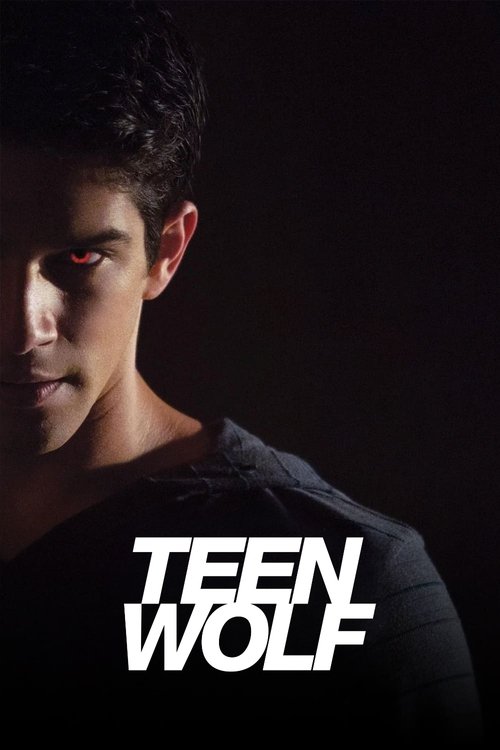
Teen Wolf
Season 5 Analysis
Season Overview
On the eve of Senior Year, Scott and his friends find themselves facing the possibility of a future without each other, a next phase of their lives that might take them in different directions despite their best intentions. Little do they know that outside forces are already plotting to break the pack apart long before they ever see graduation; new villains that use a combination of science and the supernatural for a malevolent and mysterious purpose that will eventually pit Scott and his friends against their greatest enemy yet.
Season Review
Categorical Breakdown
The main cast features significant racial diversity, including a Hispanic male lead (Scott McCall), an Asian-American female lead (Kira Yukimura), and an African-American supporting character (Mason Hewitt) who is introduced as part of the core group. The narrative focuses on character merit and supernatural power as the basis for a person's standing, not on a critique of race or intersectional hierarchy. The non-white characters are essential heroes, but the primary strategist, a white male (Stiles Stilinski), is equally competent.
The central villain for the latter half of the season is the Beast of Gévaudan, a monster rooted in 18th-century French folklore. The narrative focuses on defeating this supernatural threat and the dark science of the Dread Doctors. Local institutions, such as the Sheriff's Department and the hospital staff, are shown to be protective forces, guided by the ethical character of the adults. The story shows no hostility toward Western civilization, one's home, or ancestors.
Female characters consistently hold exceptional, high-level supernatural power, notably Lydia as the all-powerful Banshee and Kira as the dangerous Kitsune. The main male protagonist, Scott, is temporarily killed, and his resurrection is dependent on the protective, maternal actions of his mother, the nurse. The narrative gives female characters the unique power to drive key plot points and their storylines often center on controlling their immense ability, placing them in a position of distinct strength and narrative importance.
The season fully normalizes a same-sex relationship with the introduction of the new recurring character Mason Hewitt and his boyfriend Corey Bryant. The narrative casually presents this relationship as a standard part of high school life and community, without any instance of on-screen homophobia or societal pushback. This normalization centers an alternative sexuality within the core social structure of the show.
The conflict operates entirely within the realm of supernatural folklore, science, and a moral code centered on the concept of 'the pack.' The show maintains Scott's core morality against killing, which reflects a transcendent moral law based on character, not religious dogma. Traditional religion is ignored and is not framed as a source of evil or bigotry within the storyline.