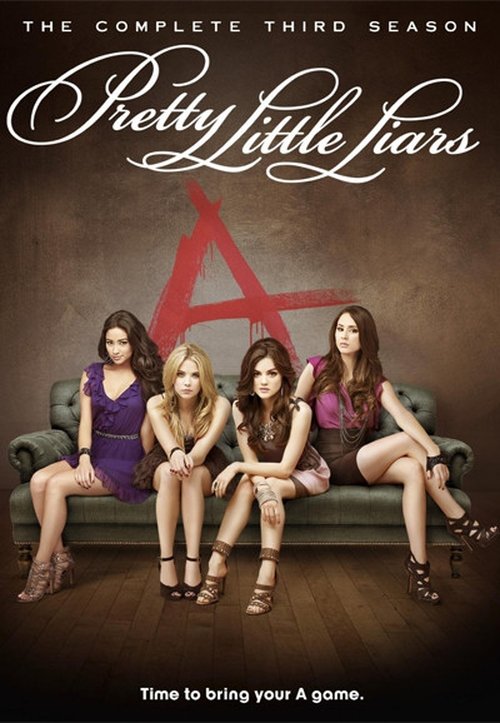
Pretty Little Liars
Season 3 Analysis
Season Overview
No specific overview for this season.
Season Review
Categorical Breakdown
Characters are judged by their actions as friend, victim, or perpetrator in the central mystery, not by immutable characteristics. Diversity exists in the main cast, with Emily Fields and Mona Vanderwaal being non-white, but their race is never the subject of the narrative. The plot focuses on secrets, blackmail, and paranoia, adhering to a colorblind casting approach that prioritizes plot function over identity lecturing.
The setting of Rosewood is portrayed as corrupt and secretive, especially among the wealthy adults and local institutions like the police and the mental hospital. The villainy is specific to the town's toxic culture and its deep-seated secrets. There is no suggestion that Western civilization itself is fundamentally corrupt or that ancestors are being demonized. The critique remains contained within a fictional, upper-class American suburb.
The four main protagonists are all women, and their intelligence, loyalty, and determination drive the entire plot. This establishes a strong "Girl Boss" dynamic where women are the core problem-solvers. However, the female characters are also deeply flawed, facing mental breakdowns, trauma, and a descent into morally gray areas, which grounds their heroism. Male characters are split between protective heroes and treacherous villains, preventing complete male emasculation.
The sexual identity of one of the four core Liars, Emily Fields, is lesbian, and her committed relationship with Paige McCullers is a continuous, central arc throughout the season. The show treats this alternative sexuality as completely normative, centering the same relationship dramas and struggles as the heterosexual couples. This integration of alternative sexuality is foundational to one of the main character's storylines, but there is no explicit political lecturing or advocacy for gender ideology over biological reality.
Religious themes are largely absent from the core mystery. The show’s moral framework is complex and ambiguous, as nearly every character has secrets or commits moral compromises, which is typical for the thriller genre. There is no explicit mockery of traditional religion, nor are Christian characters specifically singled out as bigoted or evil. The morality is subjective in the sense of 'shades of gray' but not presented as a philosophical lecture on 'power dynamics'.