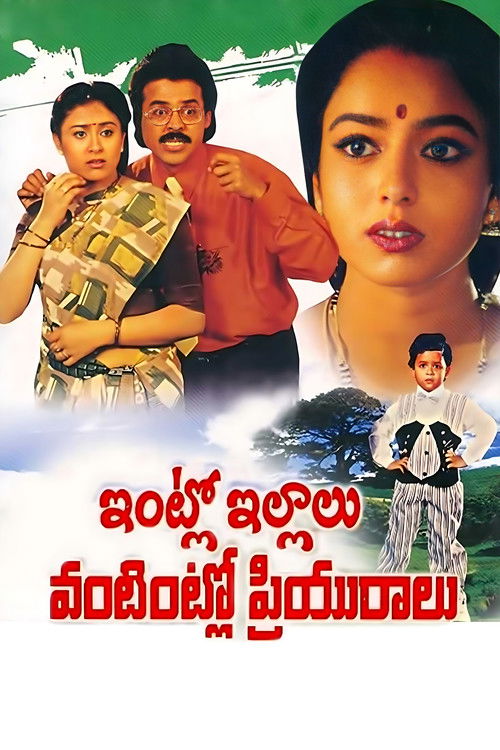
Intlo Illalu Vantintlo Priyuralu
Plot
When Sriram learns that his wife, Seeta, cannot bear a child, he keeps it hidden from his father. However, he marries Manisha under dire circumstances during his trip to Nepal and soon learns that she is pregnant. They have a son and Seeta, after much reluctance, accepts Manisha as Sriram's wife.
Get the Weekly Woke Watchlist
New and trending movies scored for woke bias, preachy messaging, and forced political themes — before you waste your evening.
No spam. One useful email per week.
Overall Series Review
Categorical Breakdown
Characters are judged by their integrity and capacity for self-sacrifice, not by race or immutable characteristics. The narrative features different cultural backgrounds (Telugu, Nepali), but the focus remains on individual moral choices and familial duty. No intersectional hierarchy or political lecture is present.
The film centers on upholding and expanding the joint family institution. The core problem is the lack of a child, and the entire plot works toward resolving this to reinforce the central home and its heritage. Institutions of marriage and family are depicted as essential shields against chaos.
The main plot driver is the desire for children, making the message explicitly pro-natalist. Female characters are defined by their capacity for motherhood and wifely sacrifice, culminating in a relationship of complementary acceptance. No 'Girl Boss' trope or emasculation of the male lead occurs; the husband's actions are protective.
The story is exclusively centered on a heterosexual, polygamous structure driven by the need for procreation. The nuclear and extended family unit is presented as the default and essential structure. No centering of alternative sexualities or introduction of gender theory is present.
The moral framework is one of objective values, including love, sacrifice, and duty, which are the source of the characters' strength and the final reconciliation. Faith is neither demonized nor the primary focus, but the moral law driving the plot is transcendent, not subjective power dynamics.
Get the Weekly Woke Watchlist
New and trending movies scored for woke bias, preachy messaging, and forced political themes — before you waste your evening.
No spam. One useful email per week.