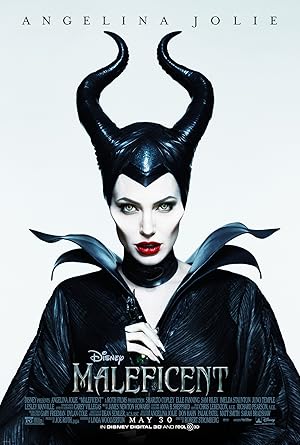
Maleficent
Plot
A beautiful, pure-hearted young woman, Maleficent has an idyllic life growing up in a peaceable forest kingdom, until one day when an invading army threatens the harmony of the land. Maleficent rises to be the land's fiercest protector, but she ultimately suffers a ruthless betrayal - an act that begins to turn her pure heart to stone. Bent on revenge, Maleficent faces a battle with the invading king's successor and, as a result, places a curse upon his newborn infant Aurora. As the child grows, Maleficent realizes that Aurora holds the key to peace in the kingdom - and perhaps to Maleficent's true happiness as well.
Get the Weekly Woke Watchlist
New and trending movies scored for woke bias, preachy messaging, and forced political themes — before you waste your evening.
No spam. One useful email per week.
Overall Series Review
Categorical Breakdown
The narrative creates a world of systemic oppression based on immutable characteristics, setting up a clear hierarchy where the human world (traditional monarchy/civilization) is the aggressive, fearful oppressor, and the magical folk of the Moors are the oppressed 'Other' and victims of exploitation. The central villain is a white male king driven by ambition and greed who commits a foundational act of violence against a powerful female for political gain.
The film strongly vilifies the central institutions of the Western-coded human kingdom, portraying its king as corrupt, selfish, and incompetent, and its society as fundamentally driven by fear and the desire to exploit the natural world. The narrative champions the non-human, magical realm of the Moors, which represents a spiritually superior 'Noble Savage' archetype in harmony with nature, making the home culture the source of all evil.
The story is a complete subversion of the traditional female narrative, where the female lead is betrayed and mutilated by a male seeking power. The male characters are overwhelmingly depicted as villains or bumbling, ineffectual fools, including the Prince, whose traditional 'true love's kiss' is shown to be completely worthless. The curse is broken only by the female protagonist’s selfless maternal love for the girl, establishing a female-centered bond as the ultimate form of 'true love' and entirely marginalizing male-female romance and the nuclear family structure.
No explicit LGBTQ+ characters or overt gender ideology are present. However, the film subverts the traditional family unit by deconstructing the male-female romantic archetype and replacing it with a non-traditional, female-centered mother/daughter bond as the source of salvation and a new societal order. The traditional pairing is rendered impotent and unnecessary to the happy ending.
The story replaces a higher, objective moral law with moral relativism, as the protagonist's identity is stated to be 'both hero and villain' and the ultimate redemption comes not from traditional moral rectitude or faith, but from a self-generating maternal love that defies good/evil binaries. The horned, demonic-looking anti-heroine is ultimately the savior, suggesting that moral truth is subjective and contested rather than transcendent.
Get the Weekly Woke Watchlist
New and trending movies scored for woke bias, preachy messaging, and forced political themes — before you waste your evening.
No spam. One useful email per week.