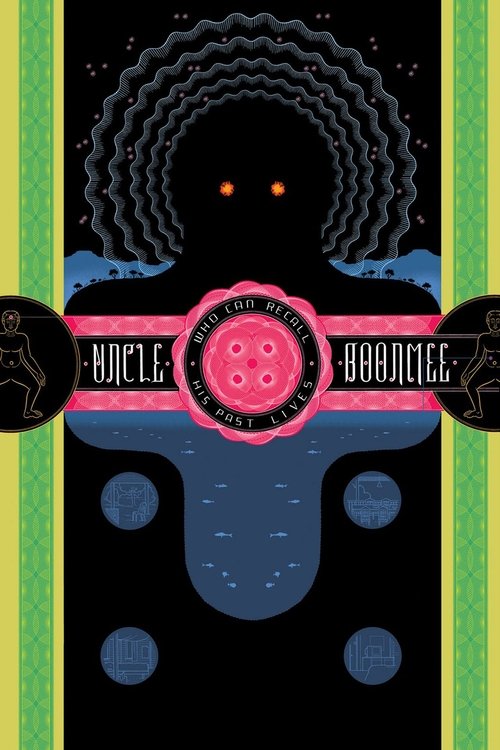
Uncle Boonmee Who Can Recall His Past Lives
Plot
Suffering from acute kidney failure, Boonmee has chosen to spend his final days surrounded by his loved ones in the countryside. Surprisingly, the ghost of his deceased wife appears to care for him, and his long lost son returns home in a non-human form. Contemplating the reasons for his illness, Boonmee treks through the jungle with his family to a mysterious hilltop cave—the birthplace of his first life.
Get the Weekly Woke Watchlist
New and trending movies scored for woke bias, preachy messaging, and forced political themes — before you waste your evening.
No spam. One useful email per week.
Overall Series Review
Categorical Breakdown
The movie is focused entirely on Thai characters and Thai cultural history. The narrative does not employ an intersectional lens based on Western race dynamics. No white characters are present to be vilified. The casting is authentic to the setting, featuring Thai and one Burmese character. Boonmee's sickness is attributed to bad karma accumulated from killing communists as a soldier, which is a karmic consequence for individual action, not systemic oppression.
The film demonstrates deep respect and reverence for its own Thai spiritual and ancestral culture. The countryside and the mysterious cave, the birthplace of Boonmee's first life, are sources of profound spiritual truth. The ancestors and deceased family members are depicted as caring, helpful spirits. The film includes a critique of an encroaching secular modernity, represented by the military and modern authorities, which seeks to erase the ancient, enchanted ways of life.
The main female characters, Huay (the ghost wife) and Jen (the sister-in-law), are defined by their nurturing roles in caring for the dying patriarch. Huay returns as a ghost purely out of enduring love and devotion for her husband. There are no 'Girl Boss' or 'Mary Sue' tropes. A mythical scene features a princess engaging in a sexual encounter with a catfish, which is surreal and symbolic of love transcending form, not a modern critique of family.
The story centers on the traditional male-female pairing of Boonmee and his wife's ghost, and the family unit. The main focus is the transmigration of the soul and the process of dying. Sexual ideology is not a main theme and the nuclear family structure is not presented as oppressive. The surreal elements, such as the son becoming a Monkey Spirit, are metaphors for spiritual transformation and karma, not deconstructions of gender or biological reality.
The entire plot is steeped in Buddhist and animist theology, making faith and spiritual belief central to the narrative structure. Concepts like reincarnation, karma, and the existence of spirits are treated as objective reality within the film's world. Boonmee's search is for a transcendent moral law to explain his suffering, which he finds in the concept of karma. The film is a work of deep spiritual acknowledgment, not a promotion of moral relativism or anti-theistic ideology.
Get the Weekly Woke Watchlist
New and trending movies scored for woke bias, preachy messaging, and forced political themes — before you waste your evening.
No spam. One useful email per week.