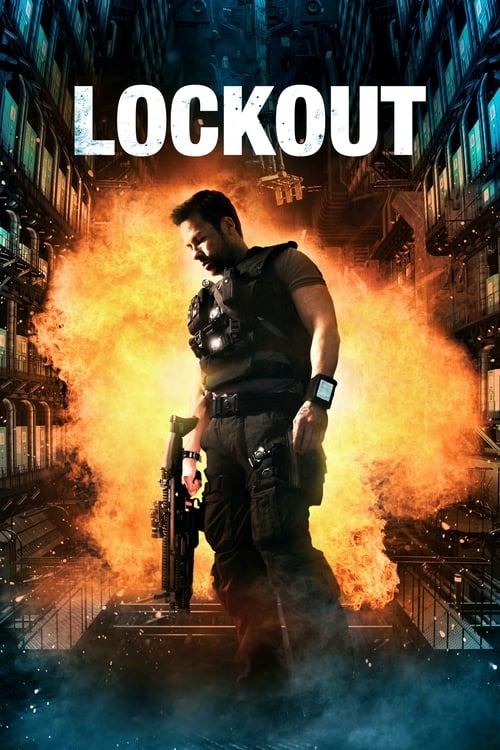
Lockout
Plot
Set in the near future, Lockout follows a falsely convicted ex-government agent , whose one chance at obtaining freedom lies in the dangerous mission of rescuing the President's daughter from rioting convicts at an outer space maximum security prison.
Get the Weekly Woke Watchlist
New and trending movies scored for woke bias, preachy messaging, and forced political themes — before you waste your evening.
No spam. One useful email per week.
Overall Series Review
Categorical Breakdown
The main character, Snow, is a classic white male anti-hero whose entire arc is centered on proving his personal merit and retrieving evidence that demonstrates his innocence. Characters are judged by their actions: the hero is a white male, the main villains are white males (the convicts), and the corrupt government agent is a black male. The narrative does not focus on race, immutable characteristics, or intersectional hierarchy to assign moral value.
The film critiques institutions like the Secret Service and the CIA, which are depicted as corrupt, deceitful, and incompetent for their role in framing the hero and mishandling the prison crisis. This institutional critique is a standard trope of the cynical 80s-style action genre. The film is set in a near-future America and does not contain themes vilifying Western civilization, heritage, or ancestors in favor of external or 'Noble Savage' cultures.
The core plot is a traditional rescue mission where the male hero must save the President's daughter. The female lead, Emilie, is portrayed as a humanitarian and a 'capable young woman' who responds well under pressure, providing her with more agency than a passive 'damsel.' However, she is still the primary target for a male-driven rescue and is subjected to explicit threats of sexual violence from the male villains, reinforcing the hero's protective masculine role. The plot contains no anti-natalist messaging or lectures on career as the only female fulfillment.
The story adheres to a normative structure, focusing on a traditional male-female pairing in an action context. There is an absence of alternative sexualities being centered in the narrative, and there is no discussion or deconstruction of the nuclear family or gender ideology. Sexual elements are limited to the violent threats made by the villains against the female hostage.
The movie operates primarily within a secular action genre framework where morality is defined by the anti-hero's pragmatic code and survival. The film uses profanity, including misuses of a higher power's name, and features a morally gray hero seeking personal redemption over a higher moral purpose. There is no overt attack on traditional religion, but the narrative does not draw on transcendent morality or faith as a source of strength for the main characters.
Get the Weekly Woke Watchlist
New and trending movies scored for woke bias, preachy messaging, and forced political themes — before you waste your evening.
No spam. One useful email per week.