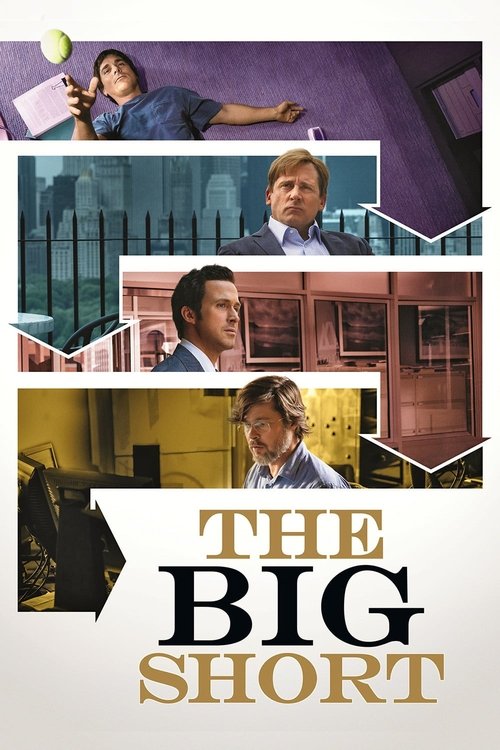
The Big Short
Plot
The men who made millions from a global economic meltdown.
Get the Weekly Woke Watchlist
New and trending movies scored for woke bias, preachy messaging, and forced political themes — before you waste your evening.
No spam. One useful email per week.
Overall Series Review
Categorical Breakdown
Characters are judged solely on their financial acumen, foresight, and moral stance against bank fraud, embodying universal meritocracy. The main group of protagonists and the major villains are white males, and race or immutable characteristics are not a factor in the plot’s conflict or character development. There is no race-swapping or forced diversity, as the characters are based on real people.
The hostility is directed specifically at the corrupt American financial institutions, not at the entire civilization, home, or ancestors. The film shows concern for the American populace who are victims of the crisis. The corruption is framed as a betrayal of trust and competence within a specific system, not as evidence that the home culture is fundamentally racist or flawed by nature.
The main characters are all male, mirroring the real individuals whose stories are told. Female characters are extremely rare and function in non-trope roles, such as a supportive wife or a celebrity explaining financial jargon. One character's final decision is to leave the financial world to start a family, which is a counter-message to anti-natalism.
The narrative contains no centering of alternative sexualities or gender ideology. All relationships and family structures shown or referenced are traditional, and the topic of sexuality or gender politics is completely private and irrelevant to the plot.
The film’s central moral vacuum is the unchecked greed of the financial sector. There is no lecture against religion, and a brief scene of characters reflecting on the impending human cost occurs on the steps of St. Patrick’s Cathedral, suggesting a spiritual or transcendent moral framework is considered, rather than actively vilified.
Get the Weekly Woke Watchlist
New and trending movies scored for woke bias, preachy messaging, and forced political themes — before you waste your evening.
No spam. One useful email per week.