Hawaii Five-0
Season 1 Analysis
Season Overview
No specific overview for this season.
Season Review
Categorical Breakdown
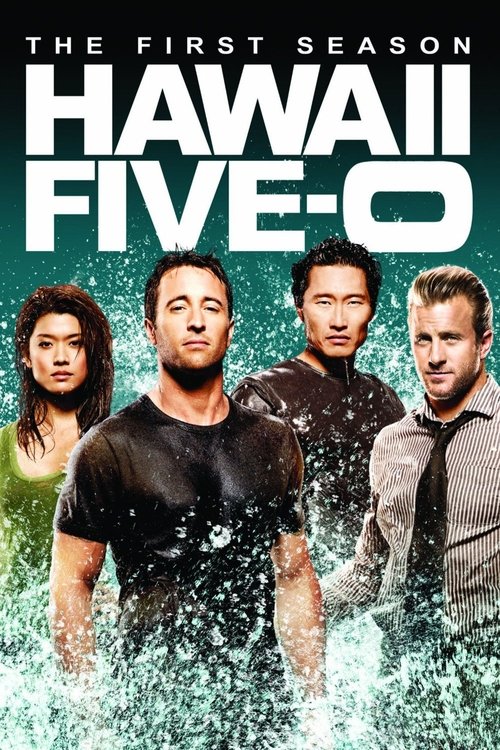
The main team is highly diverse, including two white males (McGarrett and Williams), one Asian male (Chin Ho Kelly), and one Asian female (Kono Kalakaua). This is a clear case of 'forced insertion of diversity' to update the classic series. Chin Ho's character is defined by a corruption charge, and Kono by her past as a surfer and immediate competence as a rookie. The casting features immutable characteristics as central to the team's composition, moving away from universal meritocracy, though the plot itself does not lecture on 'whiteness' or privilege, keeping the score moderate.
The show is explicitly a love letter to the setting, showcasing the 'natural beauty of the Hawaiian Islands' and framing the main characters as protectors of the state against high-level crime, terrorism, and human trafficking. The institution being protected is the state and the police task force. The only element of 'self-hatred' is Danny Williams' constant, humorous complaining about the island after moving from New Jersey, but this is a personal character flaw, not a systemic critique of Western civilization or the U.S. institution of the task force.
Kono Kalakaua, the sole female member of the core team, is presented as instantly perfect: a skilled surfer, martial artist, 'expert sniper and sharpshooter,' and a tough rookie cop who breaks barriers. The Hawaiian Governor is also a powerful female character. This heavily favors the 'Girl Boss' trope, showing a woman as immediately and universally more capable than the men who must 'prove' themselves or are flawed (McGarrett is hot-headed, Chin Ho is disgraced, Danny is bumbling). However, the show features strong, effective male leads, and Danny's dedication to his daughter and the focus on family counteracts strong anti-natalism, keeping the score from being extreme.
Season 1 is a 2010 network police procedural that focuses on action and family-centric B-plots (Danny's custody battle). There is no explicit centering of 'alternative sexualities' or 'gender ideology' lecturing in the main narrative. The structure operates entirely within the 'Normative Structure' of traditional male-female pairings and the nuclear family (even in its broken form through divorce) as the default.
The core of the series is a secular police procedural that deals with objective criminal acts (murder, kidnapping, trafficking). Moral relativism is present only in the sense that the villains have subjective motives, but the heroes operate under a strong sense of objective right and wrong (stopping crime, getting justice). The show is essentially absent of all religious themes, positive or negative, which keeps the score low. It does not display active hostility toward religion, but functions in a 'spiritual vacuum' common to network procedurals.