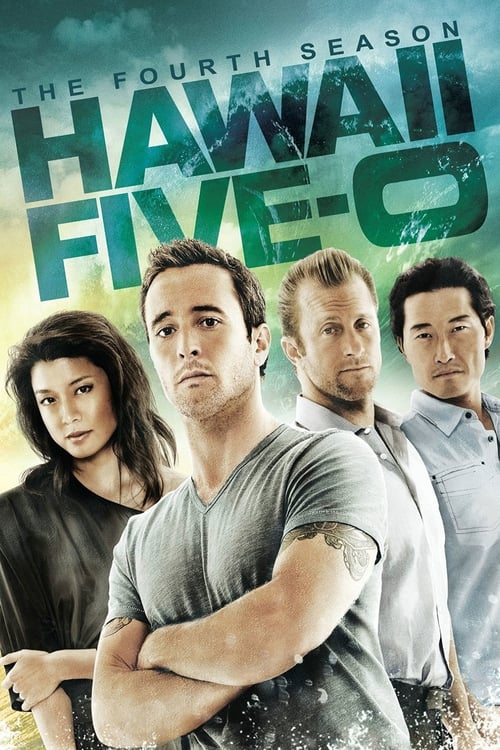
Hawaii Five-0
Season 4 Analysis
Season Overview
Picking up where Season 3 left off, we find McGarrett and Wo Fat cornered by unknown assailants in a detainment facility in season 4 of Hawaii Five-0, forcing McGarrett to break the law and turn on his own in order to find a kidnapped Catherine. Meanwhile Kono and Adam's secret location in Hong Kong is compromised, and Kono and Adam fight to stay alive when their hidden location is discovered.
Season Review
Categorical Breakdown
The narrative gives an entire episode focus to a historical racial injustice by investigating a crime committed in a World War II internment camp for Japanese Americans, centering historical victimhood. The team is naturally diverse with a White leader, an Asian-American lieutenant, a half-Asian female officer, and the addition of a Black captain, which is a diverse composition without forced-seeming casting. The main plot does not exist purely to lecture on privilege.
The series champions American law enforcement institutions and Hawaiian community spirit, working against generalized civilizational self-hatred. However, a specific episode critiques the historical action of the U.S. government by focusing on the injustice of the Japanese American internment during WWII. This criticism is balanced by storylines where the team actively fights anti-Western ideologies, such as a terrorist cell of radicalized American college students plotting an attack on U.S. soil.
Female characters like Kono and Catherine are competent and high-ranking, embodying the 'Girl Boss' trope as valued members of the elite task force. Catherine Rollins ultimately chooses to leave her stable, long-term relationship and career in the Navy to pursue a dangerous, open-ended global mission to repay a 'debt of honor'. This narrative choice frames a high-stakes career/duty as superior to a stable, traditional relationship, aligning with the 'career is the only fulfillment' message.
The season's main narrative focuses on heterosexual relationships and the nuclear family unit (Danny's attempts to reconcile his parents, Grover protecting his daughter). However, external commentary notes the presence of at least one episode dedicated to the 'LGBT community and its struggling youth,' which indicates a deliberate inclusion to focus on sexual ideology, moving beyond simple background diversity.
Morality is framed as a universal and objective concept of justice and law (Transcendent Morality). The show's antagonists include a terrorist cell motivated by a radical religious ideology, which acts as an external force of evil and is not a critique of traditional Western religion. There is no narrative hostility toward or vilification of Christian characters or institutions.