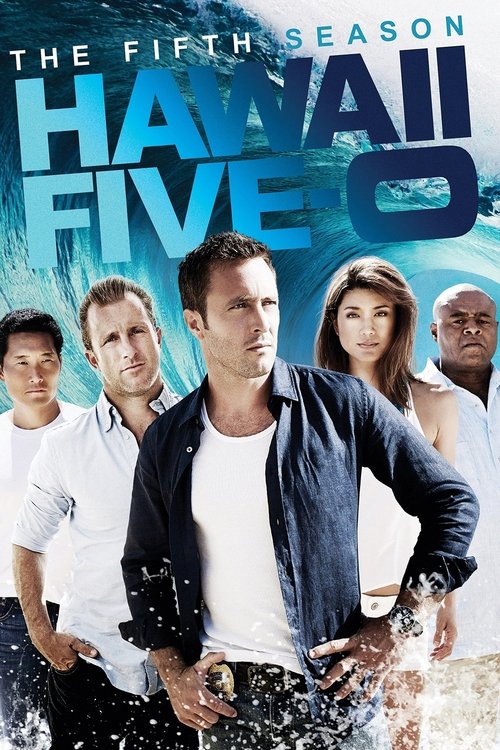
Hawaii Five-0
Season 5 Analysis
Season Overview
In the 5th season of Hawaii Five-0, McGarrett continues to try to bring closure to his father's case and closure to his mother's past, while the state's brash Five-O unit, who may spar and jest among themselves, remain determined to eliminate the seedy elements from the 50th state.
Season Review
Categorical Breakdown
The core Five-0 team is racially diverse, reflecting the Hawaiian demographics, but all characters are defined by professional competence and merit, not by race or intersectional hierarchy. The white male leads, McGarrett and Danny, are the unwavering heroic protagonists and main action drivers, with no narrative effort to vilify their 'whiteness' or their status as institutional figures. The narrative centers on a universal commitment to justice.
The show is explicitly patriotic and pro-institution, with the task force's entire existence dedicated to protecting the '50th state' from 'seedy elements.' The season features a continual showcasing of the island's beauty and a positive focus on Hawaiian culture, language, and community spirit, exemplifying gratitude for their home and institutions.
Female lead Kono Kalakaua is a strong, capable action hero who is physically competent at martial arts, going undercover, and surviving a storm at sea. Her competence is a core trait, but she is not an infallible 'Mary Sue.' The season culminates in her decision to proceed with her wedding to Adam, reinforcing the celebration of marriage and family life, which counters the anti-natalism and anti-family messaging typical of the 10/10 score. The male leads are highly capable and masculine, preventing the complete emasculation of male characters.
The dynamic between the two male leads, Steve McGarrett and Danny Williams, includes their famous 'bickering like an old married couple' that spawns the fan-driven 'McDanno' ship. The season capitalizes on this 'ship tease' for comedic effect, including a mandated review with a psychologist. However, both main characters remain heterosexual with storylines focusing on their relationships with women and their children. This introduces alternative sexualities into the subtext for entertainment but does not center sexual identity or explicitly deconstruct the nuclear family as a main theme.
The show is a crime procedural focused on objective moral truth: criminals are bad and justice must be served. There are no plots or themes devoted to criticizing or mocking religion, specifically Christianity. The characters operate under a transcendent moral framework that upholds law and order against nihilistic evil like international terrorism and warlords, fitting the definition of an objective moral law.