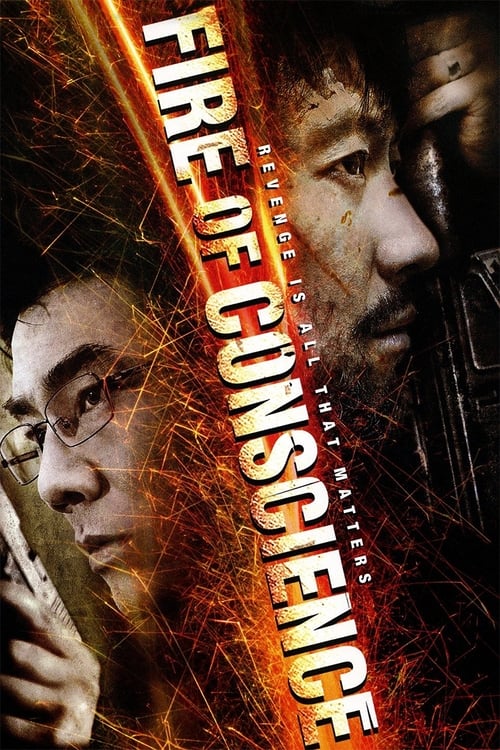
Fire of Conscience
Plot
A police detective must solve a brutal murder to prove his partner's innocence and unearth the truth behind Hong Kong's police force. The investigation brings him to an unlikely collaboration with an inspector from the Narcotics Bureau, whose motives may not be what they seem.
Get the Weekly Woke Watchlist
New and trending movies scored for woke bias, preachy messaging, and forced political themes — before you waste your evening.
No spam. One useful email per week.
Overall Series Review
Categorical Breakdown
The narrative centers on police officers facing individual corruption and moral failure, judging characters solely on their actions and conscience. The Hong Kong/Chinese cast and setting are entirely authentic to the story, with no signs of racial or intersectional politics, 'whiteness' vilification, or forced diversity insertion.
The film's critique is directed at institutional corruption within the Hong Kong police force, not the cultural or civilizational heritage of Hong Kong or East Asia. The central metaphor, the 'fire dragon dance' used to expel 'pestilence,' is derived from local Chinese tradition, affirming a respect for indigenous culture rather than self-hatred.
The main plot is driven by two male protagonists. Female characters are peripheral, mostly filling traditional roles as a deceased wife, a murdered victim, or a mother/wife whose safety is threatened. The movie is strongly male-centric and entirely bypasses the 'Girl Boss' trope or anti-natalist messaging.
There is no presence of LGBTQ+ themes, alternative sexualities, or gender ideology in the plot or character development. The sexual and family structures presented are entirely normative and traditional, with no focus on deconstructing the nuclear family.
The director explicitly links the film’s title and climax to a concept of 'pestilence in every human's soul' that must be 'beaten out,' directly addressing the theme of conscience and moral integrity. This emphasis on objective moral failure and struggle is an acknowledgement of a higher moral law, not an embrace of moral relativism or anti-theistic messaging.
Get the Weekly Woke Watchlist
New and trending movies scored for woke bias, preachy messaging, and forced political themes — before you waste your evening.
No spam. One useful email per week.