My Way
Plot
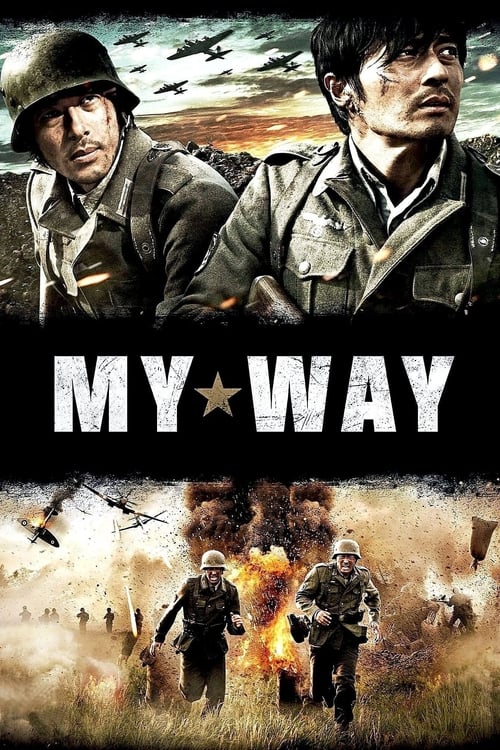
During the invasion of Normandy the photograph of a slim Korean man in German uniform was found. It transpired that the man had served as a soldier in the Japanese, Russian and German armies. His incredible story inspired director Kang Je-Gyu to create this epic war drama.
Get the Weekly Woke Watchlist
New and trending movies scored for woke bias, preachy messaging, and forced political themes — before you waste your evening.
No spam. One useful email per week.
Overall Series Review
Categorical Breakdown
The story begins with a strong focus on immutable characteristics: the plot is driven by the rivalry between a poor Korean and a privileged Japanese nationalist during a period of colonial oppression. The initial conflict is rooted in national identity and class hierarchy. However, the Japanese antagonist undergoes a major redemption arc, evolving into a man of universal equality, making the overall thematic conclusion a celebration of character merit and brotherhood over identity-based hatred.
The film does not promote self-hatred of the Korean 'home' culture; it instead honors the resilience of the oppressed Koreans. It critiques Imperial Japanese and Soviet military brutality. Notably, the depiction of German soldiers is surprisingly benign, portraying them as kind and relaxed, which is not an act of civilizational self-hatred toward a Western power.
The core narrative is a male-centric war story of rivalry and brotherhood. A female Chinese sniper character is inserted briefly and is shown to possess instantly perfect and improbable aiming skills, fitting the 'Mary Sue' or 'Girl Boss' trope of female competence exceeding realism in an action role. However, her limited screen time and function as a minor plot spur mitigate the overall impact on the film's gender dynamics. The film does not contain anti-natalist or anti-family messaging.
The plot is a war epic focused exclusively on a male-male rivalry and eventual friendship. There is no presence of alternative sexual identities, queer theory, or gender ideology lecturing. The structure is entirely normative.
The film's moral core is a universalist humanism, where the enduring value of a friend's life and the spirit of survival act as a transcendent moral force against the nihilism of war. Faith or traditional religion is not a subject of criticism or focus. The moral law for the characters is objective: save your friend, respect life.
Get the Weekly Woke Watchlist
New and trending movies scored for woke bias, preachy messaging, and forced political themes — before you waste your evening.
No spam. One useful email per week.