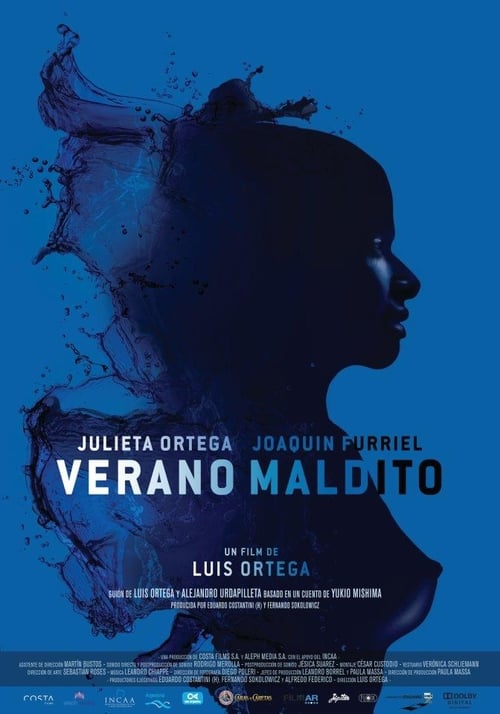
Damn Summer
Plot
Julieta and Federico are parents of three boys, it is a high class family. He is a successful architect. They receive the visit of Tito, uncle of Federico, a gray man who has just left the prison. Tito wants to go to the sea and Federico proposes to go to a house that he himself built for some friends, but Federico stays in the city, working.
Get the Weekly Woke Watchlist
New and trending movies scored for woke bias, preachy messaging, and forced political themes — before you waste your evening.
No spam. One useful email per week.
Overall Series Review
Categorical Breakdown
The casting is historically and geographically authentic for a story about an Argentine high-class family. The core conflict is centered on class, wealth, and the psychological impact of a personal tragedy, not on race or intersectional hierarchies. Characters are defined by their marital status, wealth, and actions (successful architect, absent wife, ex-convict uncle), which aligns with universal meritocracy and a traditional focus on social and psychological drama.
The film’s critique is aimed at the superficiality and moral vacuum of the high-class Argentine bourgeoisie. It deconstructs the facade of the luxurious life, showing complex and troubled relationships beneath the exterior of success. This is a targeted critique of a specific elite social class within the home culture, not a generalized demonization of Western civilization or the nation's ancestors. The institutions themselves (family, wealth) are shown as a source of weakness rather than strength.
The female protagonist, Julieta, is presented as an 'absent wife and mom' who descends into 'despair' and 'destructive fantasies' following a devastating tragedy. This is a profound study of trauma and guilt, entirely opposite to the flawless 'Girl Boss' or 'Mary Sue' trope. Masculinity is not actively emasculated; the father figure is simply absent due to work, and the men who remain (the uncle) are deeply flawed. Motherhood is shown not as a prison but as the center of a devastating emotional tragedy.
The story centers exclusively on a traditional nuclear family—a husband, wife, and their three sons—and the estranged male family member. The narrative focuses on psychological breakdown and family trauma. There is no presence of alternative sexualities being centered, nor any thematic deconstruction of the nuclear family beyond its functional collapse due to internal strife and tragedy. No gender ideology is introduced.
The film is a secular, psychological drama focused on grief, guilt, and the existential emptiness of the privileged class. It is based on an existential short story by Yukio Mishima. Traditional religion, specifically Christianity, is not a significant element in the plot and is therefore neither celebrated nor actively attacked. The morality is subjective in a classic tragic sense—a higher moral law is acknowledged only by its brutal absence in the form of natural tragedy.
Get the Weekly Woke Watchlist
New and trending movies scored for woke bias, preachy messaging, and forced political themes — before you waste your evening.
No spam. One useful email per week.