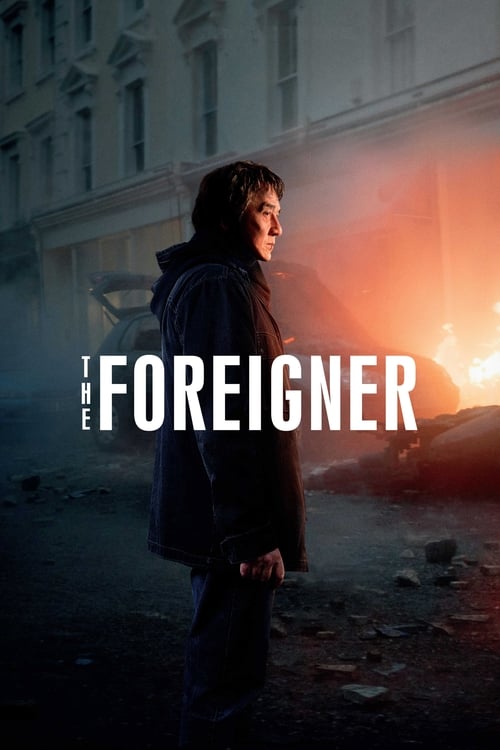
The Foreigner
Plot
Quan is a humble London businessman whose long-buried past erupts in a revenge-fueled vendetta when the only person left for him to love – his teenage daughter – dies in an Irish Republican Army car bombing. His relentless search to find the terrorists leads to a cat-and-mouse conflict with a British government official whose own past may hold the clues to the identities of the elusive killers.
Get the Weekly Woke Watchlist
New and trending movies scored for woke bias, preachy messaging, and forced political themes — before you waste your evening.
No spam. One useful email per week.
Overall Series Review
Categorical Breakdown
The core conflict pits an ethnic minority 'foreigner' against a white political/terrorist network, but the narrative does not rely on racial privilege or systemic oppression as its central theme. Quan's competence is driven by his elite military background, not his immutable characteristics, and he is judged by his skill and singular focus on justice. The casting and conflict are specific to the political setting of Irish terrorism.
The film criticizes corruption within specific political factions and the continued threat of domestic terrorism rooted in the historical conflict of The Troubles. It does not frame Western civilization as fundamentally corrupt or racist. The primary antagonist is an ex-terrorist turned politician, representing a localized moral compromise, not a rejection of ancestral heritage or home culture as a whole.
Female characters hold significant, powerful, and consequential roles, including the Cabinet Minister, a Counter-Terrorism Detective, and, notably, the terrorist mastermind of the entire bombing campaign. The narrative is explicitly anti-anti-natalist, with the hero's intense motivation stemming from the death of his daughter. The female characters are highly capable and lethal, but their roles are tied to political extremism and personal vengeance, not the 'Mary Sue' trope, and the men are portrayed as highly competent in combat and political maneuvering.
The plot is a political action thriller focused on revenge, terrorism, and political maneuvering. No element of the narrative is dedicated to centering alternative sexualities, promoting gender ideology, or deconstructing the nuclear family, which is celebrated as the hero's sole source of motivation.
The conflict is political and nationalist, revolving around IRA splinter groups and their secular objectives, not an attack on religion or Christianity. The moral compass of the film is clear-cut—the murder of innocents is evil—establishing a belief in objective morality and justice, which the hero relentlessly pursues.
Get the Weekly Woke Watchlist
New and trending movies scored for woke bias, preachy messaging, and forced political themes — before you waste your evening.
No spam. One useful email per week.