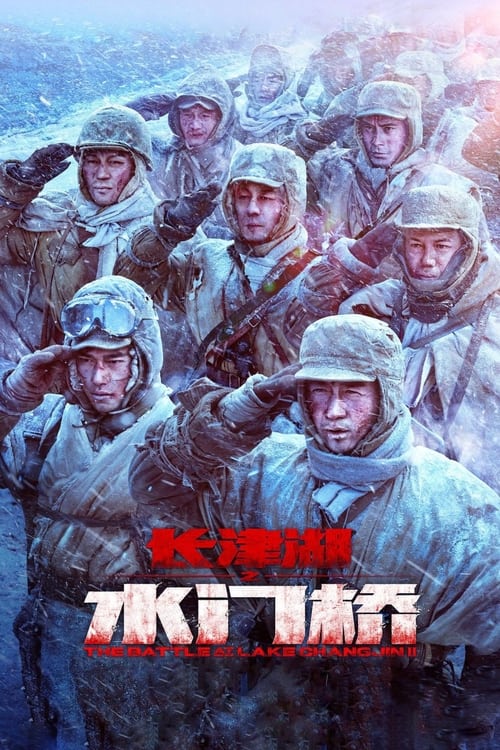
The Battle at Lake Changjin II: Water Gate Bridge
Plot
In the follow-up to "The Battle At Lake Changjin", brothers Wu Qianli and Wu Wanli undertake a new task for the People's Volunteer Army, defending a bridge part of the American troops' escape route from the advancing Chinese.
Get the Weekly Woke Watchlist
New and trending movies scored for woke bias, preachy messaging, and forced political themes — before you waste your evening.
No spam. One useful email per week.
Overall Series Review
Categorical Breakdown
The film's central conflict vilifies one group identity (American/Western military) and asserts the moral and ethical superiority of another (the Chinese People's Volunteer Army). The American forces are depicted as lazy, arrogant, and incompetent despite superior firepower, while the Chinese characters are heroes defined entirely by their national identity, cause, and collective sacrifice. This narrative structure relies heavily on contrasting two national/racial identities rather than universal human merit.
The movie is the complete inverse of Oikophobia. It is intensely nationalistic, designed to celebrate and extol the virtues of Chinese civilization, the nation, and the sacrifices of ancestors (the volunteer soldiers). The narrative views the Chinese institutions and heritage as protective shields against the foreign aggression of the 'American imperialists.'
The core of the story is an all-male 'band of brothers' military unit, focusing on traditional male themes of courage, brotherhood, and a younger man's initiation into war. There are no female leads, and the plot makes no time for romantic elements or commentary on gender dynamics, thus completely absenting the 'Girl Boss' or anti-natalist tropes.
The subject matter, an epic war film set in 1950, contains no elements of modern sexual or gender ideology. The narrative is focused on military strategy, survival, and national sacrifice, adhering to a traditional and normative structure where sexuality is private or entirely absent from the screen.
The film avoids overt hostility toward religion (specifically Christianity) but embraces a militant, political form of transcendent morality where absolute sacrifice for the People's Volunteer Army/Party is the highest moral law. It does not advocate for moral relativism. However, it frames the antagonist's (American) cause as 'irrational' and based on 'obscurantism,' indirectly attacking the ideological underpinnings of the Western system in favor of its own political 'Objective Truth.' The score is low because it embraces a non-subjective moral framework, albeit a political one.
Get the Weekly Woke Watchlist
New and trending movies scored for woke bias, preachy messaging, and forced political themes — before you waste your evening.
No spam. One useful email per week.