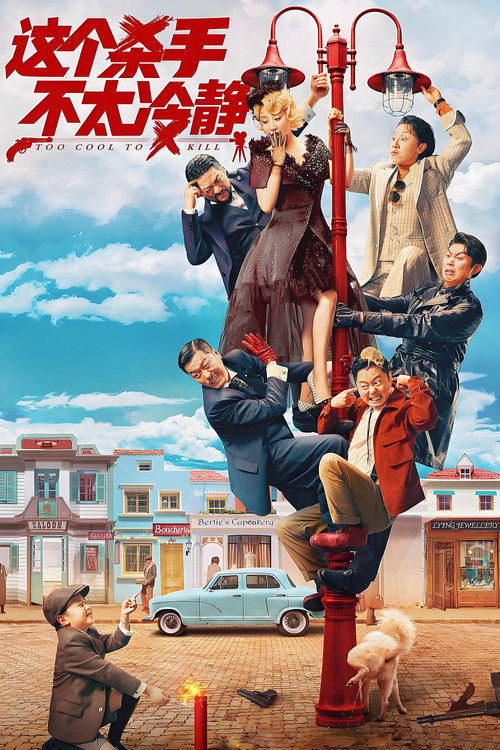
Too Cool to Kill
Plot
Wei Chenggong, a working actor with big dreams, finally appears to get his big break when actress Milan invites him to play the lead role of "Killer Karl" in a new play. Little does Wei Chenggong know, he has fallen into a perilous conspiracy where all the villains are real, and only through his acting skills and good deal of luck will he be able to make it out alive.
Get the Weekly Woke Watchlist
New and trending movies scored for woke bias, preachy messaging, and forced political themes — before you waste your evening.
No spam. One useful email per week.
Overall Series Review
Categorical Breakdown
The plot's core theme is Universal Meritocracy, as the protagonist, a lowly actor, achieves success and survival purely through his unique acting skill, perseverance, and inherent good nature. The narrative does not focus on race, immutable characteristics, or intersectional hierarchy. The cast is Chinese, and the story contains no critique of 'whiteness' or forced diversity.
The film is a Chinese production that functions as a comedic tribute to classic cinema genres (gangster, western) and a celebration of an actor's craft. The fictional setting, an exaggerated 'Euro-style' town, is an aesthetic choice for the genre parody, not a substantive critique demonizing a home culture or Western civilization. No civilizational self-hatred is present.
Actress Milan is a strong, clever, and morally complex female character who initiates the plan to deceive the gangster, motivated by escaping his financial demands and unwanted affections. Her character is proactive, which slightly raises the score from a 1. However, the story centers on the male protagonist's journey and talent, whose masculinity is protective and whose 'pure heart' ultimately wins her affection. The plot does not feature anti-natalist or 'Motherhood is a prison' messaging.
The narrative focuses on a heterosexual relationship between the male protagonist and the female lead. There is no presence of alternative sexualities being centered, nor is there any deconstruction of the nuclear family. The film contains no lecturing or reference to gender ideology.
The movie is a crime-comedy and a tribute to film; it remains secular and does not engage with traditional religion, Christianity, or anti-theist themes. The moral framework is built on the protagonist's inherent goodness, honesty, and transcendent belief in his acting dream, which allows him to succeed over the corrupt 'power dynamics' of the gangsters.
Get the Weekly Woke Watchlist
New and trending movies scored for woke bias, preachy messaging, and forced political themes — before you waste your evening.
No spam. One useful email per week.