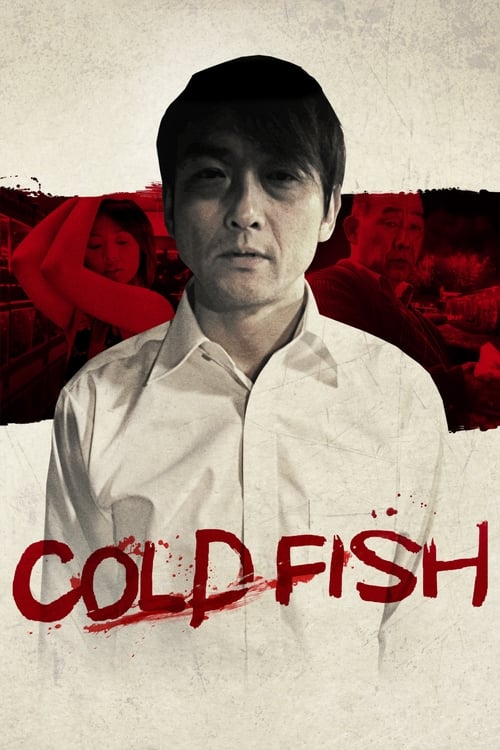
Cold Fish
Plot
When fish shop owner Shamoto's teenage daughter Mitsuko is caught stealing, a generous middle-aged man named Murata helps resolve the situation. The man and his wife offer to have Mitsuko work at their opposing fish store. Shamoto soon discovers that something far more sinister lives behind Murata's friendly demeanor.
Get the Weekly Woke Watchlist
New and trending movies scored for woke bias, preachy messaging, and forced political themes — before you waste your evening.
No spam. One useful email per week.
Overall Series Review
Categorical Breakdown
The entire cast and setting are Japanese. The conflict operates purely on the level of individual character flaw, power dynamics, and criminal depravity, not on any hierarchy of race or immutable characteristics. Character merit and moral integrity, or the lack thereof, drives the plot. There is no narrative focus on intersectional identity or the vilification of any specific racial or ethnic group.
The film functions as an autopsy of a repressed society, using extreme crime and nihilism to critique contemporary Japanese culture. The narrative suggests that Japanese conformity and the dysfunction of the modern family unit foster a latent, destructive violence. It attacks the institution of the family and social obedience, framing the home culture as fundamentally corrupt and a source of profound emotional disease.
The core family unit is presented as completely broken; the wife is having a sadistic affair and encourages her husband into a criminal enterprise, and the daughter is rebellious and violent. Motherhood is not celebrated in any capacity. The two main female characters, the protagonist's wife and the serial killer's wife, are depicted as actively immoral, sexually deviant, unfaithful, or viciously complicit in serial murder and dismemberment. This is an extremely anti-family and anti-natalist message of despair, showing gender relations as corrosive and complementary only in depravity. However, the film does not feature the 'Girl Boss' trope of an idealized, morally perfect female lead.
The core of the story is centered on traditional male-female pairings and their violent, corrupt dynamics. Sexual deviance is present as a factor in the villains' overall depravity, including a brief fetishistic scene between two female characters. This element is used to underscore the villains' corruption, not to normalize or center alternative sexualities as a political position. There is no lecturing on gender ideology or advocacy for the deconstruction of the nuclear family through a queer theory lens; the family simply collapses under the weight of crime and moral decay.
The movie is explicitly nihilistic; the protagonist's final lines articulate a philosophy of complete despair, stating that 'Life is pain.' Morality is portrayed as entirely subjective and dictated by the power dynamics of the sociopathic antagonist who forces the weak-willed protagonist into crime. Religious imagery, specifically a statue of the Virgin Mary and Catholic artifacts, is used for macabre humor and in the context of absurd violence, suggesting a profound spiritual vacuum and hostility toward transcendent moral law.
Get the Weekly Woke Watchlist
New and trending movies scored for woke bias, preachy messaging, and forced political themes — before you waste your evening.
No spam. One useful email per week.