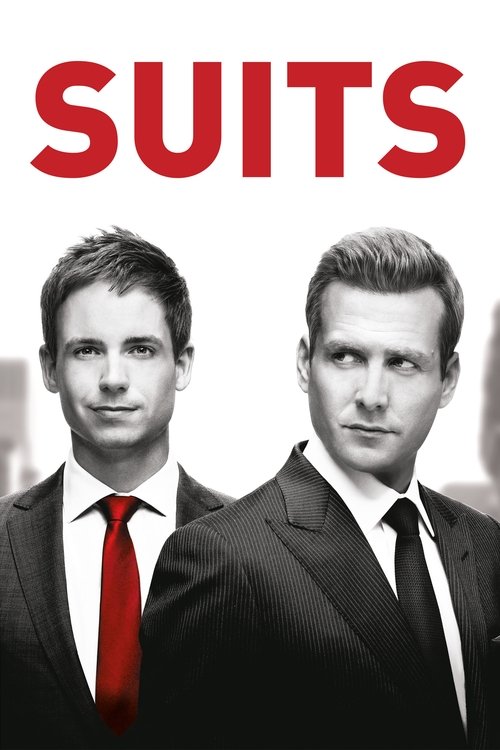
Suits
Season 2 Analysis
Season Overview
As Harvey focuses on protecting Mike's position, Jessica deals with the fallout after the unexpected reappearance of her co-founding partner.
Season Review
Categorical Breakdown
The main conflict is a corporate power struggle focused on merit, loyalty, and ambition, rather than immutable characteristics. The managing partner, Jessica Pearson, is a Black woman whose position of authority is central to the plot, and the narrative treats her power and competence as a matter of individual achievement, not a vehicle for lecturing on 'systemic oppression.' The main antagonist is a corrupt white male insider, Daniel Hardman, but his vilification is based purely on his lack of ethics, not his 'whiteness.' Mike Ross is judged by his innate genius, not his background. The only intersectional lens appears in secondary character development, such as with Rachel Zane, where her race and gender are occasionally referenced as part of the struggle to advance her career, but this does not drive the main plot.
The season scores extremely low as the entire plot revolves around securing and protecting an elite, prestigious American corporate law firm, Pearson Hardman. This institution is viewed as the ultimate prize and symbol of success, not as something fundamentally corrupt or deserving of deconstruction. Characters fight fiercely to maintain or gain control of the firm, showing immense loyalty to the institution and its prestige, an attitude completely antithetical to civilizational self-hatred. No character expresses hostility toward Western heritage or elevates 'other' cultures as spiritually superior.
The score reflects the strong presence of the 'Girl Boss' archetype, which is not an entirely neutral portrayal of gender dynamics. Jessica Pearson is established as the absolute authority, a 'strong and fierce' Managing Partner who consistently asserts her dominance over all the male partners, including Harvey. Donna Paulsen is portrayed as the witty, omniscient, and essential backbone of the firm, a true 'Girl Boss' archetype in a support role. However, male characters like Harvey Specter and Mike Ross are still brilliant and essential co-protagonists, and their flaws are rooted in emotional immaturity and moral compromise, not simple incompetence. There is no noticeable anti-natalism messaging, as the characters are overwhelmingly career-focused.
The season pre-dates the widespread mandate for LGBTQ+ inclusion in major media. The relationships depicted are entirely heterosexual, focusing on the complicated dynamic between Mike/Rachel and Harvey/Scottie/various girlfriends. There are no LGBTQ+ characters or storylines introduced, and thus no centering of alternative sexualities, deconstruction of the nuclear family, or lecturing on gender theory. The social dynamic adheres to the normative male-female structure of a traditional TV drama from the time period.
The show is a high-stakes corporate drama and is almost entirely secular. There is no open hostility toward religion, and no characters or institutions are framed as Christian bigots or villains. However, the show's core moral philosophy is transactional and highly relativistic; characters are consistently shown to adhere to a subjective moral code based on 'the right thing for me to do' or 'what I am fine with in my soul' rather than a transcendent or objective moral law. The dramatic tension comes from compromising man-made laws (the legality of Mike's presence) and ethical rules, not spiritual ones.