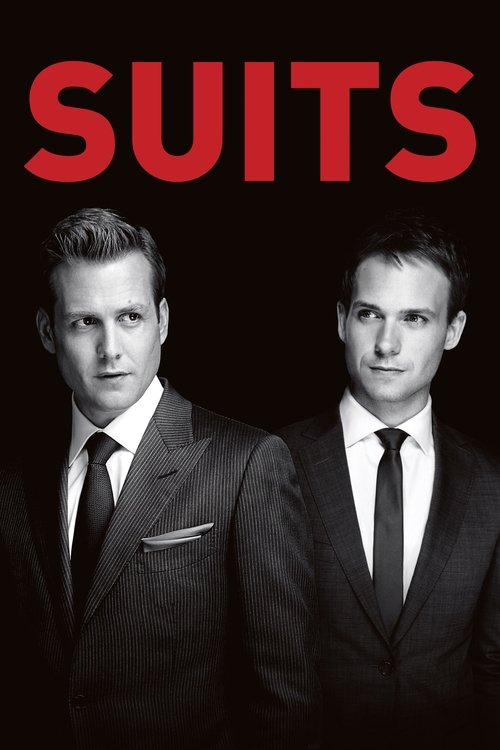
Suits
Season 3 Analysis
Season Overview
Skilled corporate lawyer Harvey Specter and his associate Mike Ross continue their unusual partnership in this season of the smart courtroom drama.
Season Review
Categorical Breakdown
The narrative focus is almost exclusively on merit and competence, as exemplified by the core plot of Mike Ross’s fraudulent, yet brilliant, legal practice. Characters, regardless of immutable characteristics, are judged entirely on their ability to perform under pressure and win cases. Jessica Pearson, a Black woman, is the firm's managing partner, and her authority is built on pure legal and corporate supremacy, without any plot point dedicated to lecturing about systemic oppression or privilege. The conflict is about corporate power, not identity.
The season contains no discernible self-hatred toward Western civilization, one’s home, or ancestors. The New York law firm setting celebrates a culture of aggressive, high-stakes capitalism, ambition, and wealth, even if the characters are often morally compromised. Institutions like the firm are viewed as shields and engines of success, and there is no reliance on the 'Noble Savage' trope.
Female characters like Jessica Pearson, Donna Paulsen, and Rachel Zane are consistently portrayed as immensely capable, indispensable, and often more emotionally intelligent or strategically superior than their male counterparts. Jessica is the 'Girl Boss' managing partner whose authority is challenged by Harvey. The women are career-centric, placing professional ambition above all else. This portrayal leans into the 'Girl Boss' trope but avoids overt anti-natalist messaging; the focus is simply on career as the only pursuit of fulfillment.
The presence of sexual ideology is minimal. Edward Darby, a supporting character from the merged British firm, is revealed to have a male lover, but this character’s sexuality is a minor biographical detail that does not become a theme for deconstruction or political commentary. The traditional male-female pairing is the primary romantic structure, and the show does not promote gender theory or critique the nuclear family.
The show's moral framework is entirely secular and transactional, centered on loyalty and the firm's corporate rules rather than a transcendent moral code. The characters constantly engage in morally gray or illegal activities, treating morality as subjective 'power dynamics' required for success. However, the narrative is not actively hostile toward religion, nor are religious characters specifically introduced as villains or bigots. The spiritual vacuum is a result of the high-stakes corporate environment, not an ideological attack on faith.