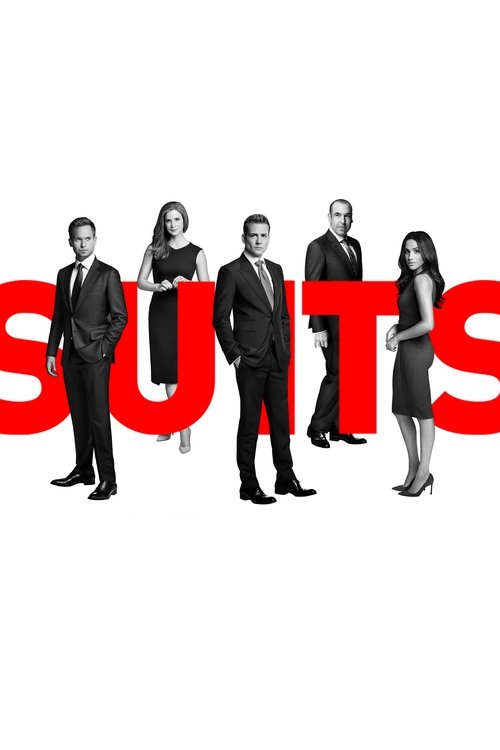
Suits
Season 7 Analysis
Season Overview
Now that Mike is officially recognized as a lawyer and has accepted Harvey’s offer to return to the firm, Season 7 will see the team back together again at Pearson Specter Litt - each dealing with their own struggles as they adjust to a new world order without Jessica .
Season Review
Categorical Breakdown
The core plot is Mike Ross's mission to expose a corrupt private prison system that profits by orchestrating fights and lengthening inmates' sentences for free labor. This focuses the narrative on systemic oppression and the corruption of a Western institution. Characters of immutable characteristics are often given the moral high ground in social justice cases. The casting continues to feature a Black lawyer (Alex Williams) in a powerful new partner role and a biracial woman (Rachel Zane) as a highly capable lawyer, emphasizing a diverse hierarchy, though Mike and Harvey, two white males, remain the primary saviors of the oppressed.
The main storyline dedicates significant time to showing the American prison industrial complex as a deeply corrupt institution that defrauds the state and exploits vulnerable populations. Jessica Pearson’s character arc explicitly involves her moving away from the white-shoe New York corporate world to pursue 'making a difference' in Chicago politics, critiquing the inherent amorality of elite capitalist success. The story's moral compass points toward the failure of the established power structure.
Donna Paulsen’s arc centers on her demanding and ultimately receiving the title of Chief Operating Officer with a vote, an ascension presented as recognition of her vital worth to the firm, even without a law degree. This creates a clear 'Girl Boss' trope where meritocracy is fundamentally bypassed to reward innate female intuition and worth. Rachel Zane's career is actively emphasized over her traditional role, and Louis's desire for a family is framed as an attempt to deliberately invert the stereotype of women being solely associated with the 'fantasy wedding, husband and children.'
The main plotlines do not center on alternative sexualities, gender ideology, or the deconstruction of the nuclear family. The sexual orientation of the main characters remains traditional, with the primary romantic focus being Mike and Rachel's forthcoming marriage and Harvey's heterosexual relationship. The season does not feature any specific political lecturing on the topic.
The show operates in a standard secular moral universe of corporate law where morality is situational and subjective. Traditional religion is neither a source of strength nor a target of direct hostility. Objective truth is defined by legal, not spiritual, frameworks. The general cynicism and Machiavellian tactics of the New York corporate world establish a purely materialist and secular moral relativism as the default state.