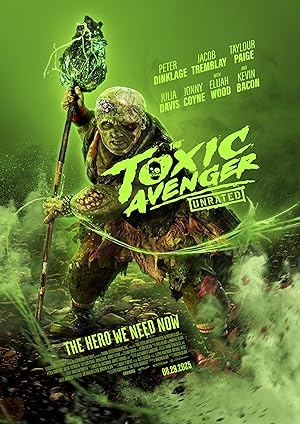
The Toxic Avenger
Plot
A horrible toxic accident transforms downtrodden janitor Winston Gooze into a new evolution of hero: the Toxic Avenger.
Get the Weekly Woke Watchlist
New and trending movies scored for woke bias, preachy messaging, and forced political themes — before you waste your evening.
No spam. One useful email per week.
Overall Series Review
Categorical Breakdown
The narrative places an immense focus on the immutable characteristics and status of the protagonist, Winston Gooze, who is a person with dwarfism and a janitor; his marginalization is his core identity before transformation. The primary villains are the CEO Bob Garbinger, a wealthy, corrupt white male, and his equally grotesque white male brother and henchman. The film explicitly vilifies 'whiteness' as the face of unfeeling corporate evil and features a plot point where the hero confronts a group of 'right-wing terrorists' called The Nasty Lads. A key competent ally is J.J. Doherty, an intrepid woman of color whistleblower, setting up a clear hierarchy of victims-turned-heroes versus privileged oppressors.
The plot's central conflict is the environmental and corporate corruption of the town, St. Roma's Villa, by the BTH company. The wealthy corporate elite, embodied by the villain, represent a deeply corrupt institution within the home culture, prioritizing profit over the health and life of the community. The movie satirizes this institution as fundamentally wicked. However, the hero's motivation is intensely local and protective—he is fighting *for* his home and his stepson, which provides a significant countervailing force of gratitude and protection toward the local community and family structure.
The movie actively removes the 'scantily-clad-babe' factor that was a hallmark of the original 1984 film, signaling a deliberate shift away from the hyper-sexualized male gaze and toward a modern, 'less exploitative' sensibility. The female supporting lead, J.J. Doherty, is an intelligent, capable, and 'intrepid whistleblower' who drives significant plot action and is an active, equal partner to the hero, aligning with the 'Girl Boss' trope of female competence. The male lead, Winston, is not emasculated but his journey is focused on caretaking and becoming a better father, with his wife's death setting up his initial sadness and the importance of his stepson.
The core narrative and character arcs are focused on traditional structures, specifically the father-son relationship between Winston and Wade. The existing reviews and plot summaries contain no explicit focus on centering alternative sexualities, deconstructing the nuclear family, or lecturing on gender ideology. The score remains low because these elements do not appear to be a theme or concern of the film, suggesting a focus on the secular, environmental-justice-via-splatterpunk main plot.
The conflict is purely secular and moral, dealing with corporate greed, environmental crime, and vigilante justice. The film does not feature traditional religious institutions or faith-based characters, either positively or negatively. Morality is framed in objective, non-spiritual terms: industrial pollution is bad, protecting the innocent is good. The lack of commentary or vilification of religion keeps the score low, as the focus is on a transcendent moral law of protecting the community and family, even if it is not faith-based.
Get the Weekly Woke Watchlist
New and trending movies scored for woke bias, preachy messaging, and forced political themes — before you waste your evening.
No spam. One useful email per week.