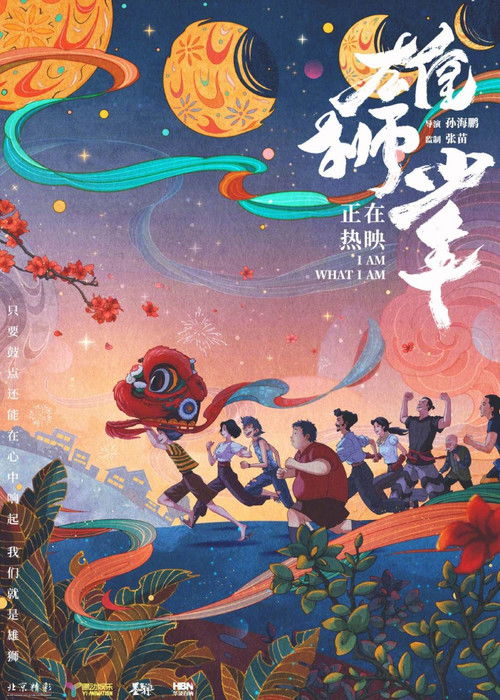
I Am What I Am
Plot
By a fortunate coincidence, Gyun is inspired and encouraged by a girl with the same name. Therefore, he decides to form a lion dance troupe with his friends, Kat and Doggie, to break the constraints of reality and fight for themselves for once.
Get the Weekly Woke Watchlist
New and trending movies scored for woke bias, preachy messaging, and forced political themes — before you waste your evening.
No spam. One useful email per week.
Overall Series Review
Categorical Breakdown
The narrative is a universal underdog story focused entirely on merit, hard work, and overcoming the socio-economic disadvantages of being 'left-behind' migrant worker children in contemporary China. Characters are judged by their dedication to the lion dance craft and their inner resolve. The film avoids all Western intersectional politics and 'whiteness' critiques.
The movie is a profound celebration of Chinese culture, specifically the traditional Lingnan lion dance, customs, and community. The story's conflict is internal, based on poverty and individual struggle, not on hostility toward the Chinese home culture or ancestors. It promotes cultural aesthetics and upholding traditional values.
While a female character is a former champion and serves as the initial inspiration for the male lead, her role is secondary and undeveloped, primarily existing to motivate the protagonist. The central journey focuses on the male hero's growth and his male mentor, a former lion dancer who gave up his dream for his family. This setup runs counter to the 'Girl Boss' trope, and motherhood/family is presented as a reason for sacrifice and stability.
The film adheres to a normative structure. The central relationship thread involves a male protagonist and a female love interest. There is no presence of alternative sexual ideologies, deconstruction of the nuclear family, or focus on gender theory throughout the narrative.
The film consciously grounds its message in secular humanism, emphasizing that ordinary people can make 'miracles happen' through 'perseverance and inner strength' instead of relying on mythology or gods. This is a focus on human virtue over the spiritual vacuum of moral relativism, and there is no overt hostility toward any traditional religion.
Get the Weekly Woke Watchlist
New and trending movies scored for woke bias, preachy messaging, and forced political themes — before you waste your evening.
No spam. One useful email per week.