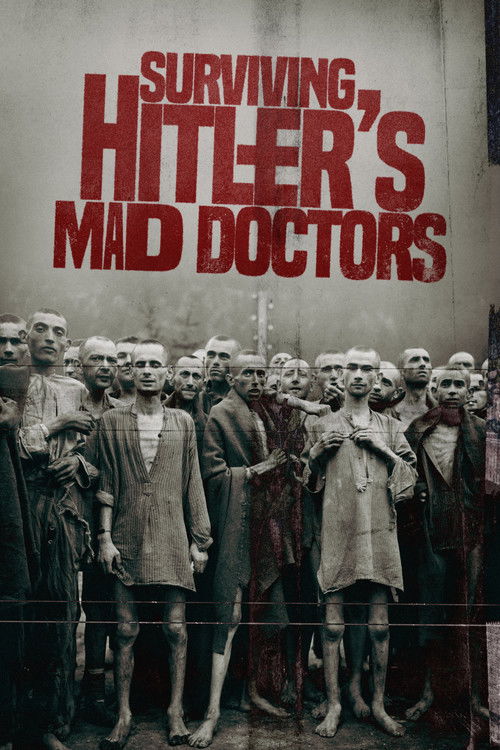
Surviving Hitler's Mad Doctors
Plot
The Nazi Regime under Adolf Hitler imposed some of the most insane forms of eugenics the world has ever seen. Between 1939 and 1945, at least 70 medical research projects, involving cruel and often lethal experimentation on human subjects, were conducted behind the walls of Nazi concentration camps. These supposed research projects were carried out by established institutions within the Third Reich and fell into three main areas; research aimed at improving the survival and rescue of German troops, testing of medical procedures and pharmaceuticals, and experiments that sought to confirm Nazi racial ideology. More than seven thousand victims of these medical experiments have been documented, but the official number remains unknown.
Get the Weekly Woke Watchlist
New and trending movies scored for woke bias, preachy messaging, and forced political themes — before you waste your evening.
No spam. One useful email per week.
Overall Series Review
Categorical Breakdown
The film documents the Nazi regime's actions, which were based on an extreme form of identity politics (Aryan supremacy and eugenics) that judged victims by race and immutable characteristics. The narrative functions as a condemnation of this system, judging the perpetrators as evil and celebrating the merit of the survivors' inherent humanity.
The content focuses on a specific historical aberration, the Nazi regime, and its crimes. It does not frame Western civilization, heritage, or home culture as fundamentally corrupt; rather, it documents an event that the rest of the West fought to defeat, implicitly upholding a moral standard. The narrative defends universal ethical values against chaos and nihilism.
The documentary focuses on medical atrocities and ethical failures, not contemporary gender dynamics. The narrative features no 'Girl Boss' tropes, no emasculation of males, and the historical context of concentration camps makes modern career-vs-motherhood messaging irrelevant to the plot.
The subject is medical experimentation, eugenics, and racial persecution. The film remains focused on the historical crimes committed against victims, and there is no evidence of centering alternative sexualities, deconstructing the nuclear family, or lecturing on modern gender theory.
The film exposes the profound moral evil of the Nazi doctors, whose actions were a radical rejection of objective truth and transcendent moral law. The condemnation of this moral vacuum reinforces the necessity of a higher ethical standard, which scores low on the anti-theism scale.
Get the Weekly Woke Watchlist
New and trending movies scored for woke bias, preachy messaging, and forced political themes — before you waste your evening.
No spam. One useful email per week.