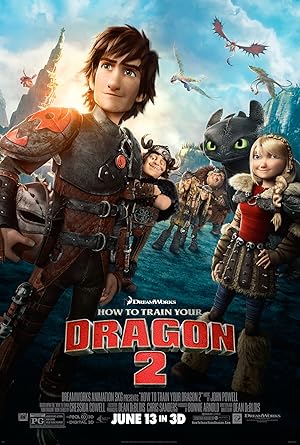
How to Train Your Dragon 2
Plot
It's been five years since Hiccup and Toothless successfully united dragons and vikings on the island of Berk. While Astrid, Snotlout and the rest of the gang are challenging each other to dragon races (the island's new favorite contact sport), the now inseparable pair journey through the skies, charting unmapped territories and exploring new worlds. When one of their adventures leads to the discovery of a secret ice cave that is home to hundreds of new wild dragons and the mysterious Dragon Rider, the two friends find themselves at the center of a battle to protect the peace. Now, Hiccup and Toothless must unite to stand up for what they believe while recognizing that only together do they have the power to change the future of both men and dragons.
Get the Weekly Woke Watchlist
New and trending movies scored for woke bias, preachy messaging, and forced political themes — before you waste your evening.
No spam. One useful email per week.
Overall Series Review
Categorical Breakdown
The hero, Hiccup, and the entire core cast of Berk Vikings are white, and the narrative centers on their individual merit and their quest for peace versus the villain's quest for domination. Character success is based on wisdom, courage, and compassion, not group identity. The villain, Drago Bludvist, is portrayed as a foreign warlord who is voiced by a non-white actor and features a character design that has been criticized by some as resembling a negative Middle-Eastern or Arab stereotype, which slightly complicates the simple 'Universal Meritocracy' rating by racializing the primary evil force.
The film is not hostile toward its home culture but presents the community as one that has evolved and improved, respecting the foundation laid by its ancestors. The culture moves away from dragon-slaying tradition toward peace, but the core institutions and sense of national identity remain intact and are valued as a shield against the chaos embodied by the invading enemy. The patriarchal figure, Stoick, is depicted as a respected and loving chief whose death is a moment of profound grief and galvanizes the hero's acceptance of leadership.
Female characters are strong and capable, like Astrid, who is a skilled warrior and leader in her own right, or Valka, who is an expert dragon rider and protector with unique knowledge. Valka's twenty-year absence from her family is not shamed, but instead presented as her own independent and principled choice, which is accepted by her husband and son without moralizing.. However, the central journey of the plot remains focused on the male protagonist, Hiccup, as he prepares to inherit the chieftainship and lead the community. The overall structure maintains traditional gender roles with a complementary relationship dynamic between Hiccup and Astrid.
The character Gobber has a brief, throwaway line during a discussion about marriage where he implies he is homosexual with the phrase 'This and one other reason.'. This is an off-hand joke, is not centered in the plot, and does not involve any political lecturing on sexuality or gender theory. The dominant relationship structure of the film is the normative male-female pairing of Hiccup and Astrid and the reunion of the nuclear family.
The film operates within a moral framework that acknowledges objective truth, where peace, compassion, and friendship are unambiguously good, and war, domination, and slavery are unambiguously evil. The characters' Viking traditions reference Norse pagan elements (e.g., Odin, funeral pyres), but there is no explicit organized religion, and therefore no anti-theistic messaging directed at Christianity or other faiths. The spiritual and moral strength comes from the bonds of family and friendship.
Get the Weekly Woke Watchlist
New and trending movies scored for woke bias, preachy messaging, and forced political themes — before you waste your evening.
No spam. One useful email per week.