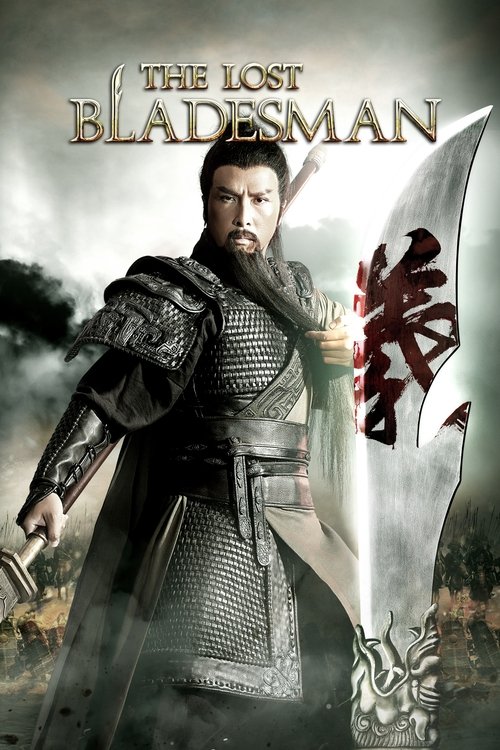
The Lost Bladesman
Plot
During the warring period of the three kingdoms, ancient China is in turmoil. To unify the country, general Cao Cao, the real power behind the Emperor, enlists the aid of the greatest warrior in the land, Guan Yu. However, Guan Yu is a loyal friend of Cao Cao's enemy Liu Bei so to persuade the peerless warrior to fight, Cao Cao takes his beloved Qi Lan hostage. After leading Cao Cao's forces to victory Guan Yu sets out with Qi Lan to rejoin Liu Bei. Now Cao Cao has deemed him too great a threat to live, and on the journey he must face all the forces at the Emperor's command sent to destroy him.
Get the Weekly Woke Watchlist
New and trending movies scored for woke bias, preachy messaging, and forced political themes — before you waste your evening.
No spam. One useful email per week.
Overall Series Review
Categorical Breakdown
The film is set in ancient China and features an entirely East Asian cast, making Western-centric identity politics concerning 'whiteness' or 'race-swapping' irrelevant. The central conflict judges characters solely by their adherence to the warrior code and moral principles like righteousness and loyalty, a purely meritocratic and character-driven focus.
The movie is a celebration of a revered Chinese national legend, Guan Yu, who embodies core traditional virtues like loyalty and honor. The narrative respects the historical and cultural setting of the Three Kingdoms, serving as a testament to the sacrifices of ancestors and the importance of a moral code within a civilization, which is the inverse of civilizational self-hatred.
The primary female character, Qi Lan, serves a traditional role as a hostage and the intended wife of the hero's sworn brother. She is neither a perfect, instant 'Girl Boss' nor a warrior, but rather a romantic object whose presence tests the hero's honor. The focus is on Guan Yu's masculinity, which is protective, loyal, and defined by a code of honor to his male sworn brother, not emasculated.
The narrative is centered on a classic dramatic conflict: a man's loyalty to his sworn brother versus his suppressed heterosexual desire for the brother's intended wife. The structure of the core relationships is entirely traditional and normative, with no presence of alternative sexual ideologies, deconstruction of the nuclear family, or gender theory.
The main character, Guan Yu, is a figure who was historically deified in Chinese culture as the 'Saint of War.' The film explicitly treats his moral code of righteousness and loyalty as a transcendent source of strength and objective truth, operating as a higher moral law against political expediency. There is no hostility toward traditional religion or spiritual life.
Get the Weekly Woke Watchlist
New and trending movies scored for woke bias, preachy messaging, and forced political themes — before you waste your evening.
No spam. One useful email per week.