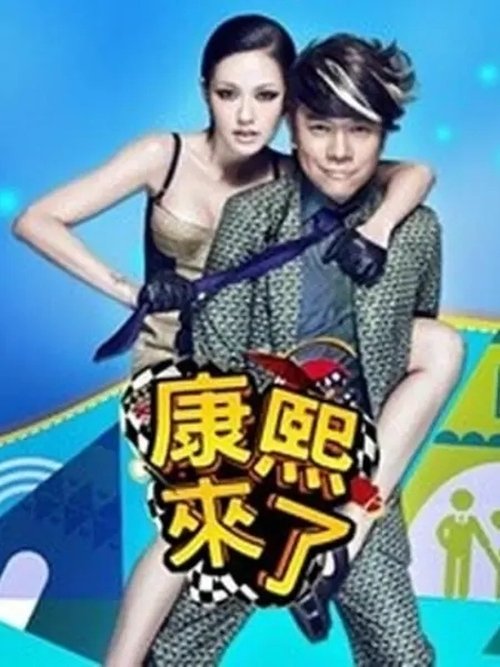
Kangsi Coming
Season 1 Analysis
Season Overview
No specific overview for this season.
Season Review
Categorical Breakdown
The show is a Sinophone program operating within a culturally homogenous context, making Western intersectional identity politics and the vilification of 'whiteness' irrelevant. Characters and guests are judged by their celebrity appeal and gossip-worthiness, not an immutable characteristic hierarchy. The casting and focus are genuinely regional and colorblind to the Western political lens.
The series functions as a staple of Taiwanese television, centering on the local celebrity culture, social issues, and even national politicians. This focus on local public figures and industry demonstrates an immersion in, rather than hostility toward, the show's home culture and civilization.
Female host Dee Hsu's hosting style is characterized as sassy, wacky, and exaggeratedly flirtatious, often involving physical comedy and suggestive interaction with male guests for entertainment. This approach is antithetical to the 'perfect Mary Sue' and 'anti-sexuality' aspects of modern 'Girl Boss' tropes. The content frequently addresses topics like celebrity marriage and family life, indicating a focus on the domestic sphere, not its demonization.
The show is explicitly noted for being one of the most high-profile platforms for LGBT culture in the Chinese-speaking world. This platforming involves centering alternative sexualities and bringing them into the mainstream celebrity gossip conversation, directly aligning with the 'centering alternative sexualities' aspect of the Queer Theory lens.
As a secular celebrity talk show, the program maintains a spiritual vacuum by focusing on superficial entertainment and personal gossip. There is no evidence in the show's format or themes of an active hostility toward traditional religion, specifically Christianity, or an ideological push for moral relativism over a transcendent moral law.