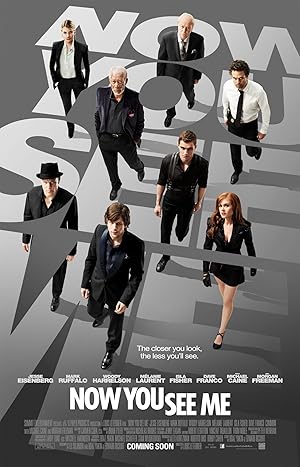
Now You See Me
Plot
Four magicians each answer a mysterious summons to an obscure address with secrets inside. A year later, they are the Four Horsemen, big time stage illusionists who climax their sold-out Las Vegas show with a bank apparently robbed for real. This puts F.B.I. Agents Dylan Rhodes and Interpol Agent Alma Dray on the case to find out how they did it. However, this mystery proves to be difficult to solve, even with the insights of professional illusion exposer Thaddeus Bradley. What follows is a bizarre investigation where nothing is what it seems to be, with illusions, dark secrets, and hidden agendas galore as all involved are reminded of a great truth in this puzzle: the closer you look, the less you see.
Get the Weekly Woke Watchlist
New and trending movies scored for woke bias, preachy messaging, and forced political themes — before you waste your evening.
No spam. One useful email per week.
Overall Series Review
Categorical Breakdown
Characters are selected for their individual magical talents, reflecting a focus on meritocracy in their respective disciplines. The core team and the investigative agents are a racially and gender-mixed ensemble, but the story is not driven by racial or intersectional conflict. The villains are targeted for their financial abuses, not their immutable characteristics, and the mastermind who orchestrates the whole plot is a white male seeking personal revenge for his father.
The central conflict revolves around the deliberate and successful punishment of Western financial institutions and wealthy individuals perceived as corrupt, which aligns with the deconstruction of heritage and a hostility toward home institutions. The magicians are celebrated as folk heroes for stealing from a French bank and an American insurance/capitalist figure, demonstrating a strong anti-authority and anti-capitalist worldview.
The main female characters, Henley Reeves (The Horseman) and Alma Dray (Interpol Agent), are portrayed as highly competent and successful professionals in their fields: a master escape artist and a dedicated detective. The female Horseman is a co-equal member of the team, and Agent Dray is a professional peer to the male FBI agent. The narrative does not focus on emasculation of males or include anti-natalism messaging, though the female roles are not dominant in the overall plot.
No characters have an alternative sexual identity or gender identity as a significant plot element. The film does not feature a deconstruction of the nuclear family or lecture on gender ideology. A passing joke about an FBI agent being a 'transvestite' is mentioned, but the theme is otherwise absent from the core narrative.
The movie introduces a mysterious, quasi-occult secret society called 'The Eye' which acts as a higher, almost mystical power that guides the magicians’ acts of justice and retribution. This organization and its vigilante, subjective moral code (stealing is justified for the ‘greater good’ and personal revenge) supplants any reliance on traditional objective morality or a faith-based moral framework.
Get the Weekly Woke Watchlist
New and trending movies scored for woke bias, preachy messaging, and forced political themes — before you waste your evening.
No spam. One useful email per week.