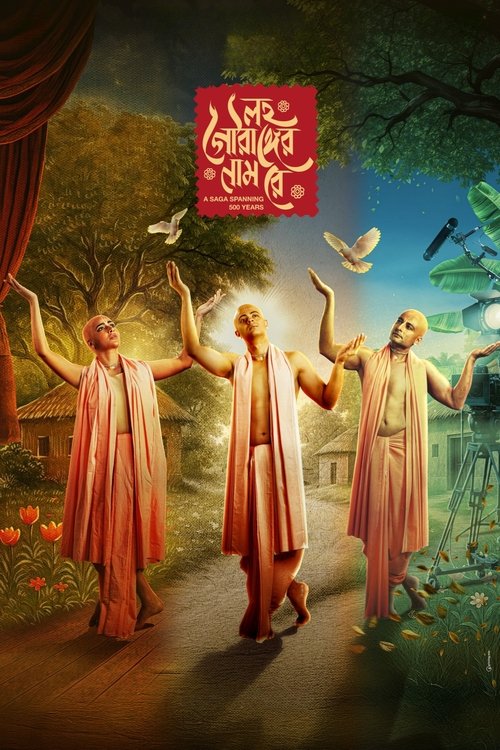
Lawho Gouranger Naam Re
Plot
Iconic rendition of Sri Chaitanya on film
Get the Weekly Woke Watchlist
New and trending movies scored for woke bias, preachy messaging, and forced political themes — before you waste your evening.
No spam. One useful email per week.
Overall Series Review
Categorical Breakdown
A historical focus on the life and legacy of a figure whose movement famously transcended caste anchors the film in universal spiritual equality. The narrative uses a framework that highlights the story of Nati Binodini, a historical actress from a marginalized background who played the saint on stage, and features a young female filmmaker leading the modern investigation. Character definition is primarily spiritual and cultural, with a mild emphasis on gender/social status for the framing devices.
The film engages with the life of a seminal national and cultural figure whose story promotes spiritual love and devotion. The narrative explores the historical and spiritual legacy with authenticity and emotional depth, reflecting a position of cultural preservation. Any critique is aimed at the corruption of specific historical 'ruling and priestly class' figures, which is an internal reformative critique that validates the saint's message, not hostility toward the entire heritage.
The contemporary storyline is driven by a young female filmmaker who leads the intellectual quest to uncover the mystery of Chaitanya's disappearance. This positions a highly competent, career-focused woman in the central 'Girl Boss' role of the investigator. The plot includes a modern man who is primarily characterized as a celebrity actor involved in a personal relationship drama. The inclusion of the historical Nati Binodini, a woman embodying the male saint on stage, further centers female perspectives on the spiritual core.
The plot focuses on the spiritual, historical, and cultural legacy of a 16th-century religious figure. There is no narrative focus on centering alternative sexual identities, gender ideology, or the deconstruction of the nuclear family. The presentation follows a normative structure.
The central theme is the life, teachings, and devotion (Bhakti) of a major Hindu spiritual leader, and the film is described as offering spiritual splendour and concluding with religious ceremony. The narrative celebrates transcendent morality, reflecting faith as a source of strength. Conflicts depicted are historical, with the saint challenging corrupt figures, not rejecting the spiritual core itself.
Get the Weekly Woke Watchlist
New and trending movies scored for woke bias, preachy messaging, and forced political themes — before you waste your evening.
No spam. One useful email per week.