Trolls
Plot
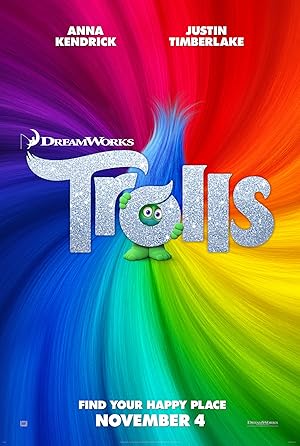
From the creators of Shrek comes the most smart, funny, irreverent animated comedy of the year, DreamWorks' Trolls. This holiday season, enter a colorful, wondrous world populated by hilariously unforgettable characters and discover the story of the overly optimistic Trolls, with a constant song on their lips, and the comically pessimistic Bergens, who are only happy when they have trolls in their stomach. Featuring original music from Justin Timberlake, and soon-to-be classic mash-ups of songs from other popular artists, the film stars the voice talents of Anna Kendrick, Justin Timberlake, Russell Brand, James Corden, Kunal Nayyar, Ron Funches, Icona Pop, Gwen Stefani, and many more. DreamWorks' TROLLS is a fresh, broad comedy filled with music, heart and hair-raising adventures. In November of 2016, nothing can prepare you for our new Troll world.
Get the Weekly Woke Watchlist
New and trending movies scored for woke bias, preachy messaging, and forced political themes — before you waste your evening.
No spam. One useful email per week.
Overall Series Review
Categorical Breakdown
The central conflict is not based on race, class, or intersectional status, but on a division between two species based on their emotional states and behaviors: the happy Trolls versus the miserable Bergens. Character merit, particularly in finding internal happiness, is the universal metric for the final redemption of the Bergen community.
The culture of the Trolls—defined by constant, unrestrained positive expression—is celebrated and deemed superior. The Bergens' home culture is framed as deeply flawed, but the critique is aimed at their single, destructive tradition of 'Trollstice' (eating Trolls) which is reformed, rather than an indictment of a general civilization or its ancestors.
Princess Poppy is the primary initiator of the rescue quest, embodying the empowered female protagonist who becomes queen by merit. However, her initial plan is reckless and ill-conceived, requiring the rational, prepared male character, Branch, to accompany and protect her. The male character's competence is essential to the mission, balancing the 'Girl Boss' trope with a complementarian reliance on distinct strengths for success. The film culminates in two clear heterosexual pairings.
The movie utilizes an intense and pervasive aesthetic of rainbows, glitter, and disco culture, which serves as a highly visible cultural signifier. The sequence where a secondary Bergen character undergoes a transformation is underscored by a performance of the song 'I'm Coming Out,' clearly centering themes of identity and self-acceptance using overt signifiers associated with sexual ideology for a general audience.
The core thematic resolution is the revelation that true happiness—the film's ultimate moral good—is not found in any external act, object, or tradition, but is an entirely subjective feeling that originates and must be found 'inside.' This doctrine reframes the ultimate source of truth and morality away from any transcendent or objective moral law and into a purely internal, emotional vacuum.
Get the Weekly Woke Watchlist
New and trending movies scored for woke bias, preachy messaging, and forced political themes — before you waste your evening.
No spam. One useful email per week.