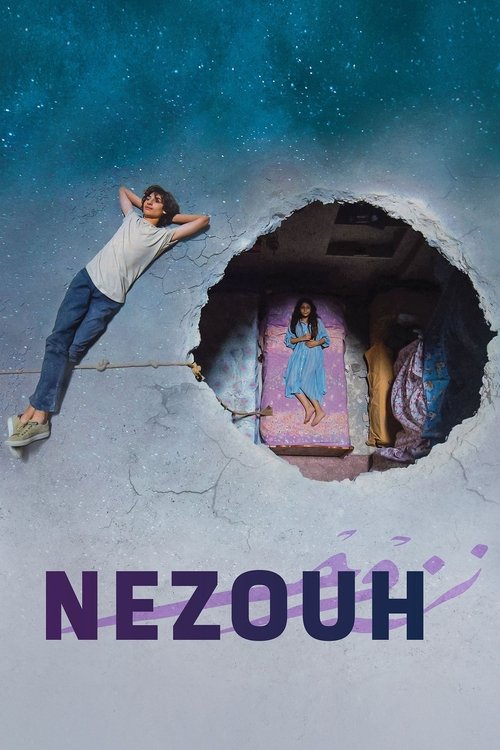
Nezouh
Plot
Even as bombs fall on Damascus, Mutaz refuses to flee to the uncertain life of a refugee. His wife, Hala, and daughter, Zeina, must make the choice whether to stay or leave.
Get the Weekly Woke Watchlist
New and trending movies scored for woke bias, preachy messaging, and forced political themes — before you waste your evening.
No spam. One useful email per week.
Overall Series Review
Categorical Breakdown
The film's focus is on the specific, non-Western, and authentic experience of a Syrian family dealing with the consequences of the civil war. The characters' identity is tied to their nationality and plight as war victims, not to an intersectional framework or a critique of Western 'whiteness'.
The film is not hostile toward Western civilization. The narrative critiques the traditional, rigid institution of the 'home' and the patriarchal family structure when the father's stubborn traditionalism endangers his family by refusing to evacuate. The women's need for 'freedom' is pitted against the father's nationalistic commitment to his besieged homeland, framing the preservation of the family institution as an obstacle to survival.
The movie is explicitly described as a 'tale of female emancipation' and a 'feminist parable'. The father, Mutaz, is the figure of traditional, protective masculinity whose resistance to leaving becomes a life-threatening obstacle to the women's survival and the daughter's coming-of-age freedom. The women are portrayed as the agents who make the final, life-affirming choice for the family.
The story centers on a traditional nuclear family (father, mother, daughter) and the daughter’s coming-of-age includes a coming-of-age attraction to a male neighbor. No alternative sexualities, gender ideology, or deconstruction of the nuclear family beyond the critique of patriarchy are evident in the plot summaries.
The film focuses on the social, political, and family drama of war and is not centered on a critique of religion or an argument for moral relativism. The conflict is existential and relational rather than theological.
Get the Weekly Woke Watchlist
New and trending movies scored for woke bias, preachy messaging, and forced political themes — before you waste your evening.
No spam. One useful email per week.