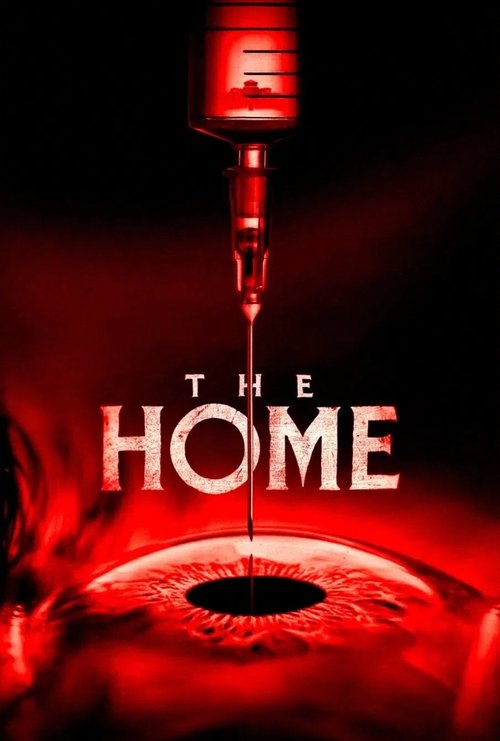
The Home
Plot
A troubled man starts working at a retirement home and realizes its residents and caretakers harbor sinister secrets. As he investigates the building and its forbidden fourth floor, he starts to uncover connections to his own past and upbringing as a foster child.
Get the Weekly Woke Watchlist
New and trending movies scored for woke bias, preachy messaging, and forced political themes — before you waste your evening.
No spam. One useful email per week.
Overall Series Review
Categorical Breakdown
The core conflict is not based on race or immutable characteristics but on a ruthless generational and class hierarchy: wealthy, powerful elders exploiting youth from the neglected foster care system. The protagonist, Max, is a troubled white male who is positioned as the hero, and the villains are the elderly elite, regardless of their gender or background, who use their systemic power to commit atrocities. The narrative does not lecture on a broader 'whiteness' or forced intersectional hierarchy.
The film demonstrates a hostility toward certain Western institutions—the foster care system and elder care facilities—by depicting them as pipelines for 'systemic abuse' and 'institutional rot.' The villains are essentially a cabal of wealthy 'ancestors' who practice 'generational theft' by literally draining the youth of the generation following them. This is a critique of a corrupt and greedy outcome within a Western society, but it is not a 10/10 wholesale demonization of Western civilization itself; it targets a specific, grotesque form of institutional failure and elite corruption.
The story is a male-centric narrative, following the troubled Max on his redemption arc from vandal to protector. The main female characters are diverse in role, including a kind elderly ally and a female foster parent who is an active member of the villainous cult. There is no evidence of a 'Girl Boss' trope, and Max is not presented as an emasculated or bumbling idiot. The themes revolve around survival and systemic critique, not anti-natalism or feminist theory.
The narrative focuses on Max's personal trauma from his foster care experience and the uncovering of the cult's exploitation. There are no reported themes or plot points that center on alternative sexualities, deconstruct the nuclear family structure for political reasons, or engage with gender ideology. The focus remains on a horror-thriller framework with social commentary.
The film features a central 'cult that worships the goddess Dea' for the purpose of obtaining physical immortality, which is the direct source of the story’s evil. This represents a false, materialist spiritual vacuum, but it is an invented pagan-like structure tied to the villains. There is no reported hostility toward traditional Western religion or Christianity, as the evil is rooted in a perversion of spirituality that values physical life over all transcendent or objective moral law.
Get the Weekly Woke Watchlist
New and trending movies scored for woke bias, preachy messaging, and forced political themes — before you waste your evening.
No spam. One useful email per week.