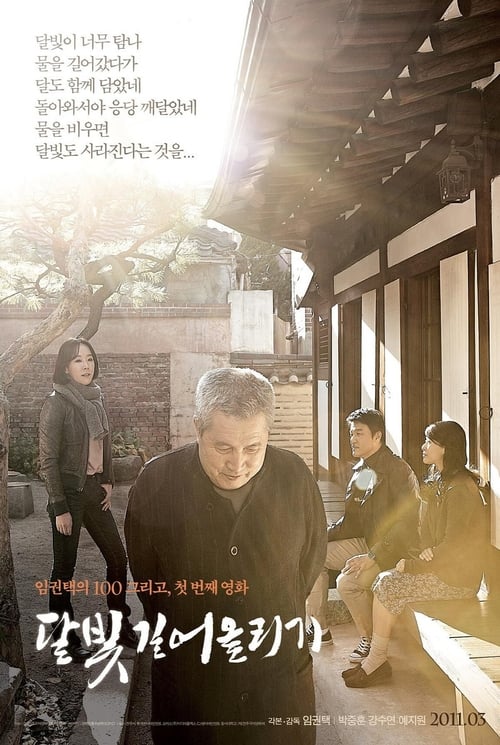
Hanji
Plot
Low-ranking civil servant Pil Yong (Park Joong Hoon) has things hard looking after his disabled wife(Ye Ji Won). He takes charge of a hanji project in hopes it will bring him a promotion. His wife comes from a family of hanji masters. One of his tasks include working with quarrelsome filmmaker Ji Won (Kang Su Yeon), who is shooting a documentary about hanji. Though he knows little about the subject to begin with, the more he learns about hanji, the more it takes on a new significance for him and the world around him.
Get the Weekly Woke Watchlist
New and trending movies scored for woke bias, preachy messaging, and forced political themes — before you waste your evening.
No spam. One useful email per week.
Overall Series Review
Categorical Breakdown
The film focuses on a distinctly Korean cultural struggle, preserving the craft of *hanji*, and features an all-Korean cast. Character value is judged by merit and personal morality, such as Pil Yong's journey from seeking a promotion to genuine passion for the craft, and his guilt over past actions. There is no focus on Western immutable characteristics, vilification of 'whiteness,' or political lectures on systemic oppression.
The film's core theme is the celebration and revival of a deeply rooted Korean traditional craft, *hanji*, which is described as long-lasting and beautiful, and is used in a project to restore the annals of the Joseon Dynasty. The narrative explicitly respects and promotes Korean culture and ancestors, even framing 'modernization' as a threat to the tradition, directly opposing the definition of civilizational self-hatred.
The score is very low as the primary focus is on a traditional craft and a flawed marriage. The male lead is introduced as deeply flawed and guilt-ridden for his past affair, which partially paralyzed his wife. The female documentary filmmaker, Ji Won, is an active professional, described as 'quarrelsome,' making her a flawed, three-dimensional character rather than a 'Mary Sue.' The narrative centers on the importance of the family and the husband's moral obligation and redemption, which stands against anti-natalist messaging.
The narrative is entirely focused on a male civil servant, his disabled wife, his past infidelity, and the challenge of reviving a traditional Korean craft. There is no presence of alternative sexual ideologies, deconstruction of the nuclear family, or lecturing on gender theory. The central relationship is a traditional male-female marriage struggling with moral issues.
The film's theme centers on finding a 'consuming passion' and 'newfound purpose' through the centuries-old, meticulous art of *hanji*-making, connecting human effort to a lasting, transcendent form of art and history. The cast includes a 'Monk Doam,' suggesting the respectful presence of traditional spiritual life. The narrative is a quest for moral and spiritual elevation, acknowledging a higher moral law through personal responsibility and art, which is the opposite of anti-theism.
Get the Weekly Woke Watchlist
New and trending movies scored for woke bias, preachy messaging, and forced political themes — before you waste your evening.
No spam. One useful email per week.