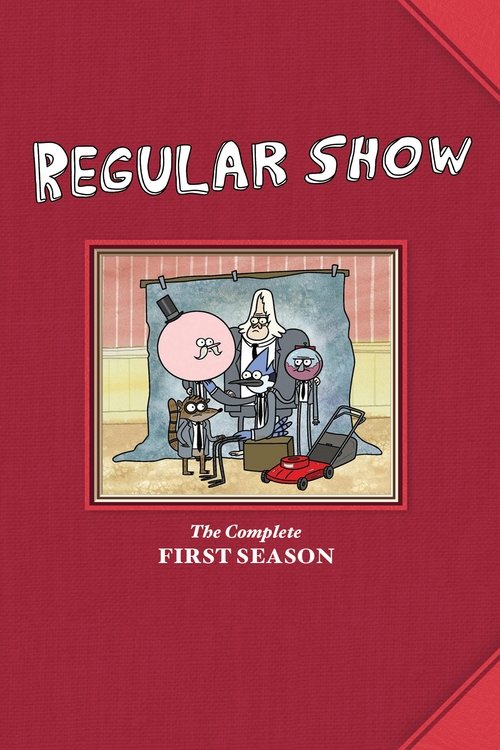
Regular Show
Season 1 Analysis
Season Overview
No specific overview for this season.
Season Review
Categorical Breakdown
Characters are anthropomorphic animals or fantastical beings; their species is a visual gimmick, not a proxy for human race or identity. The central conflict is purely behavioral—slackers versus their responsible boss—which is a universal trope not reliant on an intersectional hierarchy. The show operates under a meritocracy of consequences, where irresponsible actions lead to universally bad outcomes. There is no vilification of 'whiteness' or forced insertion of diversity.
The setting is a local park, representing a mundane institution of Western life. The problems arise not from the corruption of the institution itself, but from the protagonists' attempts to subvert their duties within it. The narrative does not criticize the home culture, history, or Western civilization; instead, it uses a contemporary, local setting as a stable base for the introduction of absurd, external fantasy elements.
The main cast and central friendship are male. While the male protagonists are bumbling and incompetent, this is the core comedic premise of the 'slacker' trope, not a gendered message of emasculation. Female characters like Margaret and Eileen are minor, typically serving as heteronormative romantic interests and foils to the protagonists' immaturity, but they are not presented as 'Mary Sue' or 'Girl Boss' figures. There is no anti-natalism or anti-family messaging.
The show is focused on a traditional male friendship and the protagonists' attempts at traditional heterosexual dating. Alternative sexualities or gender ideology are not a theme and are never centered or lectured upon. The structure is normative, focusing on male-female pairing as the standard romantic pursuit for the main characters.
The show uses supernatural elements and cosmic entities as absurd, high-stakes plot devices, not as a critique of organized religion or Christianity. The frequent emphasis on the immediate, tangible consequences of poor moral choices (lying, cheating, slacking off) acknowledges an objective truth of right and wrong, aligning with a transcendent moral law of responsibility rather than moral relativism.