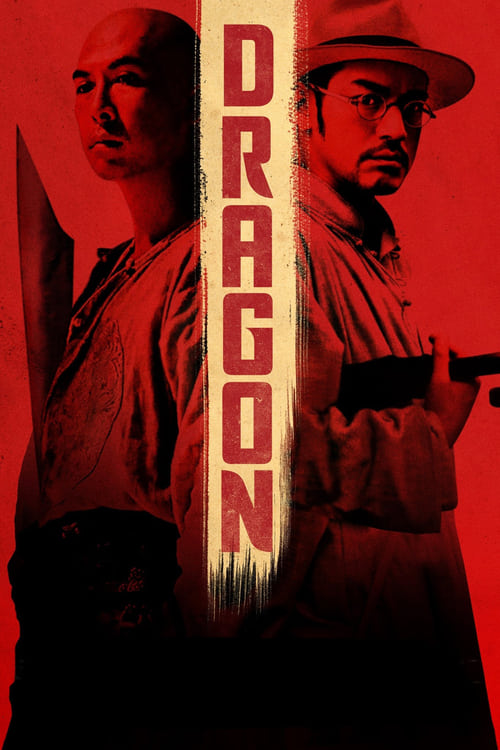
Dragon
Plot
A sinful martial arts expert wants to start a new tranquil life, only to be hunted by a determined detective and his former master.
Get the Weekly Woke Watchlist
New and trending movies scored for woke bias, preachy messaging, and forced political themes — before you waste your evening.
No spam. One useful email per week.
Overall Series Review
Categorical Breakdown
The film is an entirely Chinese production with an Asian cast, set authentically in a Chinese village in 1917. The core conflict is moral and existential: a man's struggle to atone for his 'sinful' past and a detective's search for objective truth. Character value is judged by a desire for a righteous, moral life over a violent one, adhering to the principle of universal meritocracy (or, in this case, universal sin and redemption).
The setting is a 'Chinese pastoral' that celebrates the simplicity, peace, and prosperity of the traditional, tight-knit village community and family life. The film is an homage to classic Chinese 'wuxia' cinema, showing respect for the nation's cultural heritage and film traditions. The threat comes from internal criminality (a vicious martial arts gang), not from a deconstruction or demonization of the home culture itself.
The core motivation for the male protagonist's reformation and courage is his wife and their nuclear family. His wife, Yu, is an active supporter of his new life, and their relationship is portrayed as complementary, with the husband adopting a peaceful, protective role. Motherhood is shown as a sacred structure worth fighting to preserve. There is no presence of 'Girl Boss' tropes or anti-natalist messaging. The central conflict remains between the two male leads.
The narrative centers entirely on the struggle of a man to save his traditional nuclear family (himself, his wife, and two sons). The focus is exclusively on the male-female pairing as the standard domestic structure. There is no presence of queer theory, alternative sexualities, or discussion of gender ideology in the plot.
The plot is deeply concerned with traditional morality, fate, karma, and personal sin, explicitly grappling with whether a former sinner can achieve 'redemption.' This acknowledgment of a higher moral law and the gravity of past actions stands against moral relativism. While the spiritual concepts are Eastern (karma/fate), the overall message supports transcendent morality over an amoral or anti-theistic viewpoint. There is no vilification of Christianity or other major world religions.
Get the Weekly Woke Watchlist
New and trending movies scored for woke bias, preachy messaging, and forced political themes — before you waste your evening.
No spam. One useful email per week.