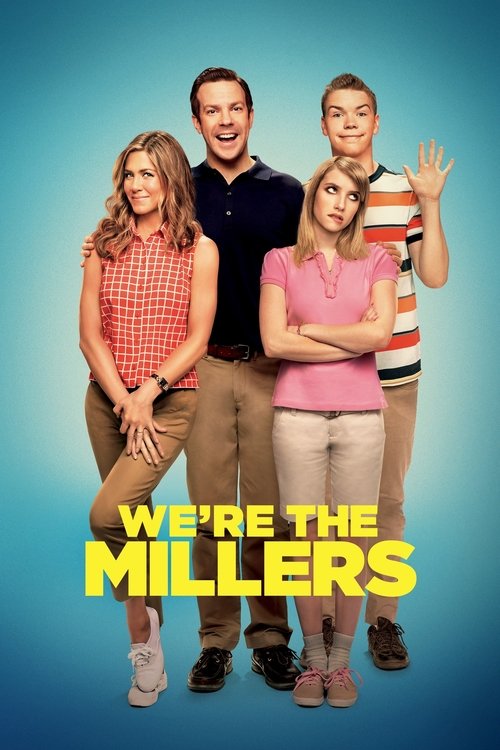
We're the Millers
Plot
A veteran pot dealer creates a fake family as part of his plan to move a huge shipment of weed into the U.S. from Mexico.
Get the Weekly Woke Watchlist
New and trending movies scored for woke bias, preachy messaging, and forced political themes — before you waste your evening.
No spam. One useful email per week.
Overall Series Review
Categorical Breakdown
The movie does not engage with identity politics. The main cast is composed of white characters whose issues are purely financial and situational. Character merit is the sole driving force, as the main characters are judged on their ability to pull off the drug run and ultimately care for one another. There is no lecturing on privilege or vilification of whiteness. The casting is colorblind to the extent that race is not a factor in the narrative.
The film’s central theme is the unexpected, genuine formation of a protective and loving family unit from four societal outcasts. The narrative arc champions a fundamental institution (family) by showing it as the shield that saves the characters from chaos (drug lords and criminals). There is no hostility toward Western civilization, one’s home, or ancestors; instead, the value of the traditional family structure is ultimately affirmed, even if it is formed through unconventional means.
The female lead is a stripper who uses her sexuality to solve problems, including a key scene where she performs a striptease for a Mexican drug lord to distract him. This portrays her as competent and capable, but the scene is explicitly filmed for male gaze and sexual objectification, not as a celebration of female empowerment or a 'Girl Boss' trope. The 'mom' character is ultimately fulfilled by the creation of the family unit, which runs counter to anti-natalist messaging. However, the use of her body for comic relief and plot device slightly detracts from a purely complementary view, warranting a low score rather than a perfect 1.
The narrative centers entirely on a heterosexual couple pretending to be husband and wife, focusing on the nuclear family structure as the most effective cover. Sexuality is primarily treated as a source of raunchy comedy, exemplified by the 'son' character being a virgin and the 'mom' character being a stripper. The plot contains no centering of alternative sexualities, deconstruction of the nuclear family beyond its initial fake premise, or introduction of gender ideology.
Religion and faith are absent from the film's conflict and themes. The movie is focused entirely on secular matters of crime, money, and interpersonal relationships. There is no critique, demonization, or embrace of any specific spiritual or religious worldview. Moral law is acknowledged only in the sense that committing a major felony (drug smuggling) is treated as a high-stakes bad act with serious consequences, which is the driving force of the plot.
Get the Weekly Woke Watchlist
New and trending movies scored for woke bias, preachy messaging, and forced political themes — before you waste your evening.
No spam. One useful email per week.