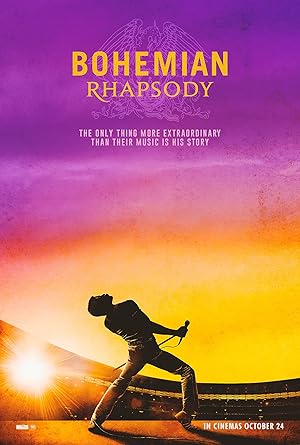
Bohemian Rhapsody
Plot
Bohemian Rhapsody is a foot-stomping celebration of Queen, their music and their extraordinary lead singer Freddie Mercury. Freddie defied stereotypes and shattered convention to become one of the most beloved entertainers on the planet. The film traces the meteoric rise of the band through their iconic songs and revolutionary sound. They reach unparalleled success, but in an unexpected turn Freddie, surrounded by darker influences, shuns Queen in pursuit of his solo career. Having suffered greatly without the collaboration of Queen, Freddie manages to reunite with his bandmates just in time for Live Aid. While bravely facing a recent AIDS diagnosis, Freddie leads the band in one of the greatest performances in the history of rock music. Queen cements a legacy that continues to inspire outsiders, dreamers and music lovers to this day.
Get the Weekly Woke Watchlist
New and trending movies scored for woke bias, preachy messaging, and forced political themes — before you waste your evening.
No spam. One useful email per week.
Overall Series Review
Categorical Breakdown
The narrative focuses on universal meritocracy; Freddie Mercury’s success is based on his talent and ambition, not on his Parsi/Zanzibari immigrant status. He encounters minor peer taunting but quickly transcends it to achieve superstardom. His three white male bandmates are consistently portrayed as competent, musically brilliant, and supportive partners in his success, rather than being depicted as incompetent or evil.
The film depicts the protagonist's rejection of his strict, traditional Parsi home life and ancestral name (Farrokh Bulsara) in favor of the rock and roll lifestyle. This is a clear choice to shed his inherited culture for a more bohemian, Western subculture. However, the film itself is a triumphant celebration of a major product of modern Western popular culture, Queen's music, and does not frame Western civilization as fundamentally corrupt.
The core female role, Mary Austin, is portrayed as the grounding, non-sexual, 'true love' and emotional anchor in the protagonist's life. The male band members are depicted as highly competent, protective, and vital to the success of the group. There is no evidence of the 'Mary Sue' or 'Girl Boss' trope, nor is there any anti-natal or anti-family messaging directed at Mary; she remains his family figure.
Alternative sexual identity (bisexuality/homosexuality) is centered as the protagonist's main personal struggle and a key driver of the plot. His journey of self-acceptance is the emotional core of the film. The film explores the conflict between his non-normative sexual desires and his traditional relationships, which is a high intensity of sexual ideology, though some commentary suggests his immersion in the gay scene is framed in a moralizing, cautionary light as a destructive 'wilderness' period.
Freddie's Parsi/Zoroastrian traditional family and its conservative ethical code are presented as the main barrier to his authentic self-fulfillment. The father is a stern figure who preaches 'Good thoughts, good words, good deeds,' a value system Freddie must break free from to become the rock star. The narrative implies that following subjective truth (being 'who he is') is the ultimate good, placing individual desire above inherited traditional religious morality.
Get the Weekly Woke Watchlist
New and trending movies scored for woke bias, preachy messaging, and forced political themes — before you waste your evening.
No spam. One useful email per week.