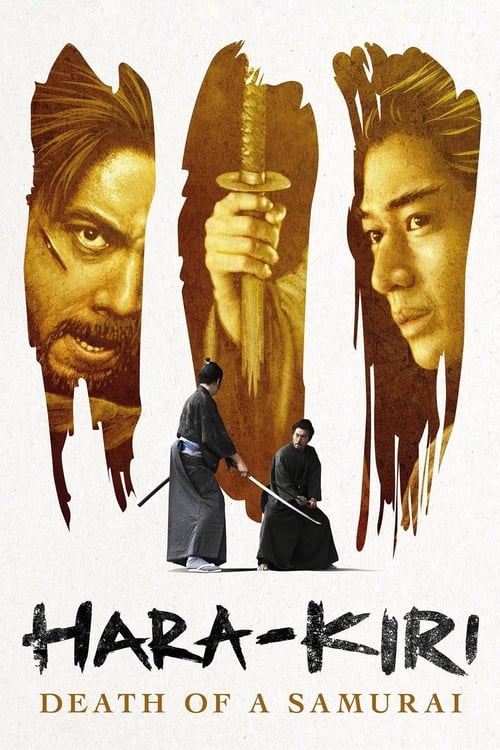
Hara-Kiri: Death of a Samurai
Plot
A tale of revenge, honor and disgrace, centering on a poverty-stricken samurai who discovers the fate of his ronin son-in-law, setting in motion a tense showdown of vengeance against the house of a feudal lord.
Get the Weekly Woke Watchlist
New and trending movies scored for woke bias, preachy messaging, and forced political themes — before you waste your evening.
No spam. One useful email per week.
Overall Series Review
Categorical Breakdown
The film’s casting is historically and culturally authentic for a 17th-century Japanese setting. The conflict is a critique of a class-based hierarchy (rich clan retainers vs. poor masterless samurai), focusing on character merit and moral integrity rather than immutable characteristics or Western-style racial/intersectional hierarchy.
The film criticizes the institutionalized hypocrisy and cruelty of the powerful samurai lords who rigidly enforce an empty code of 'honor' to oppress the poor. This is an internal, moral critique of a system's corruption, not a wholesale demonization of the Japanese civilization, culture, or ancestors. The film celebrates the protagonists' core values of family, justice, and true integrity.
The main female character is a devoted wife and mother whose tragic fate is the emotional catalyst for the entire story. The film emphasizes the importance of the nuclear family as a foundation worth fighting for. Masculinity is portrayed as protective and capable, while motherhood is a source of strength and central motivation for the male protagonists. There are no 'Girl Boss' or anti-natalist messages present.
The narrative focuses entirely on a traditional, historical social structure and family dynamics. The core relationships are heterosexual and centered around the nuclear family unit (father/daughter, husband/wife, parents/child). No alternative sexual ideologies, deconstruction of the family, or gender theory themes are introduced.
The central moral conflict is an indictment of the hypocrisy within a secular, socio-economic code (Bushido) and the powerful figures who misuse it. The film does not focus on or vilify organized religion (like Buddhism or Shintoism). The story operates within a clear moral framework where the cruelty of the antagonists is objectively evil, acknowledging a transcendent moral law of justice.
Get the Weekly Woke Watchlist
New and trending movies scored for woke bias, preachy messaging, and forced political themes — before you waste your evening.
No spam. One useful email per week.