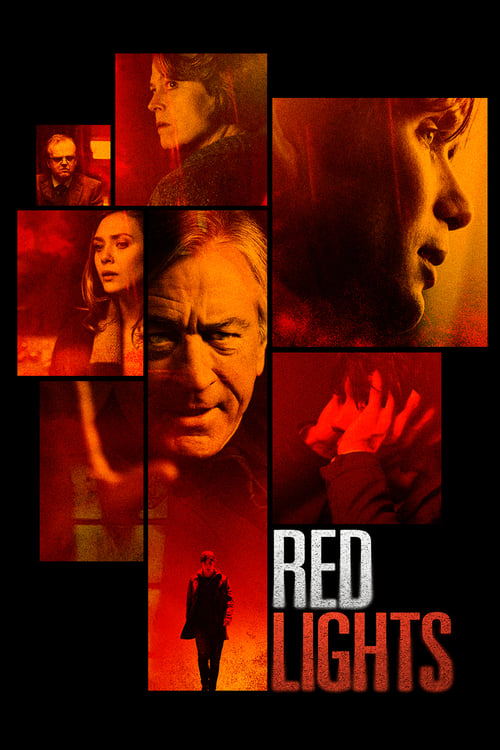
Red Lights
Plot
Two investigators of paranormal hoaxes, the veteran Dr. Margaret Matheson and her young assistant, Tom Buckley, study the most varied metaphysical phenomena with the aim of proving their fraudulent origins. Simon Silver, a legendary blind psychic, reappears after an enigmatic absence of 30 years to become the greatest international challenge to both orthodox science and professional sceptics. Tom starts to develop an intense obsession with Silver, whose magnetism becomes stronger with each new manifestation of inexplicable events. As Tom gets closer to Silver, tension mounts, and his worldview is threatened to its core.
Get the Weekly Woke Watchlist
New and trending movies scored for woke bias, preachy messaging, and forced political themes — before you waste your evening.
No spam. One useful email per week.
Overall Series Review
Categorical Breakdown
Characters are defined by their scientific expertise as a psychologist and a physicist. The casting, while predominantly white, places high value on professional merit and intellectual capability over immutable characteristics. The story includes no commentary on 'whiteness' or intersectional hierarchy.
The setting is a modern, Western academic and professional environment, and the central conflict revolves around a cornerstone of Western thought: the Enlightenment's reliance on empirical science and skepticism. There is no depiction of the home culture as fundamentally corrupt or racist, and no external culture is framed as morally superior.
Dr. Margaret Matheson is a highly respected, authoritative female university professor and the leader of the investigative team, acting as the mentor to her male subordinate. This establishes a powerful, non-traditional female hierarchy. However, her motivations are tied to an unaddressed family tragedy (her comatose son), a traditionally feminine driver, and she is removed from the conflict, leaving the final victory to the male lead.
The plot focuses strictly on paranormal investigation and the clash between science and the unexplainable. There is no presence of alternative sexual identity, deconstruction of the nuclear family, or gender ideology content within the narrative.
The core debate is between scientific skepticism and the paranormal, specifically focusing on fraudulent psychics who prey on the vulnerable, not on traditional religion. The film explores the human need for 'faith' and the afterlife, but it does not present Christian characters as villains or lecture that traditional religion is the root of evil. The antagonist is a charismatic showman, not a religious figure.
Get the Weekly Woke Watchlist
New and trending movies scored for woke bias, preachy messaging, and forced political themes — before you waste your evening.
No spam. One useful email per week.