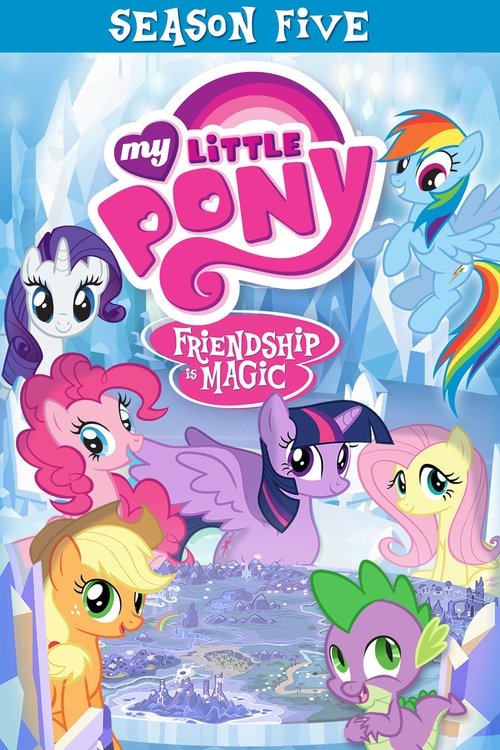
My Little Pony: Friendship Is Magic
Season 5 Analysis
Season Overview
Twilight Sparkle, Apple Jack, Pinkie Pie, Rarity, Fluttershy and Rainbow Dash visit a village where… everypony has given up their Cutie Marks?!
Season Review
Categorical Breakdown
The narrative explicitly condemns a society that views individual talent as a threat to equality. Characters are celebrated for their unique skills and personal achievements rather than their place in a social hierarchy.
The protagonists act as ambassadors for their civilization's values. They work to protect their home and its traditions from those who wish to destabilize it through radical social engineering.
The show portrays a royal pregnancy and the expansion of a family as a joyous and momentous occasion. While the leads are female, they struggle, fail, and must earn their successes through hard work and discipline.
The season maintains a focus on platonic friendship and traditional family structures. Sexual identity is not a theme, and the show does not include lectures on gender theory or alternative lifestyles.
The story treats the 'Elements of Harmony' and the 'Tree of Harmony' as sources of objective truth and higher moral law. Characters find strength in a shared set of virtues that guide their behavior.