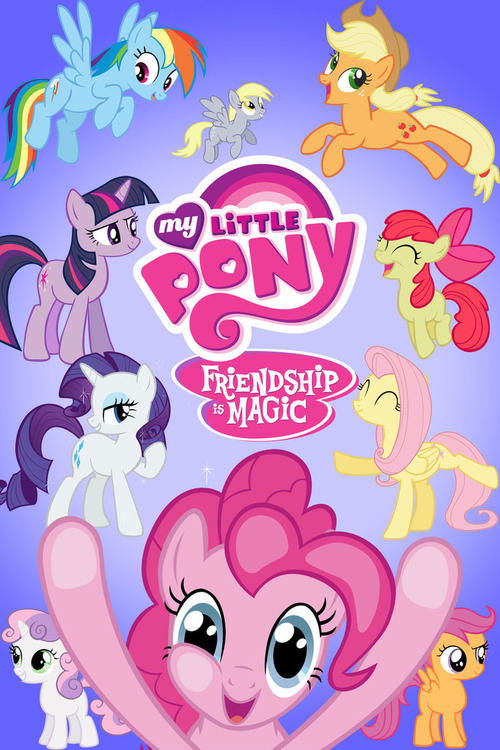
My Little Pony: Friendship Is Magic
Season 8 Analysis
Season Overview
No specific overview for this season.
Season Review
Categorical Breakdown
The story is built on an intersectional framework where characters are defined by their species as stand-ins for race. The central conflict focuses on overcoming the 'systemic racism' of the dominant pony culture to create an inclusive space for marginalized groups.
The traditional governing bodies of Equestria are depicted as xenophobic and rigid. The protagonists must reject the standards of their ancestors and bypass existing national institutions to achieve a morally superior, multi-cultural society.
The show reinforces 'Girl Boss' tropes, placing female characters in high-level administrative roles while portraying male authority figures as intolerant or misguided. Masculine influence is frequently equated with the desire for oppressive cultural preservation.
While lacking overt sexual identity subplots in this season, the 'School of Friendship' serves as a clear metaphor for 'safe spaces' and 'found families.' It prioritizes inclusive social-emotional learning over traditional biological or communal social structures.
Established moral standards are treated as oppressive power dynamics. These are replaced by the 'magic of friendship,' which functions as a form of moral relativism dictated by a magical, secular entity rather than objective moral law.