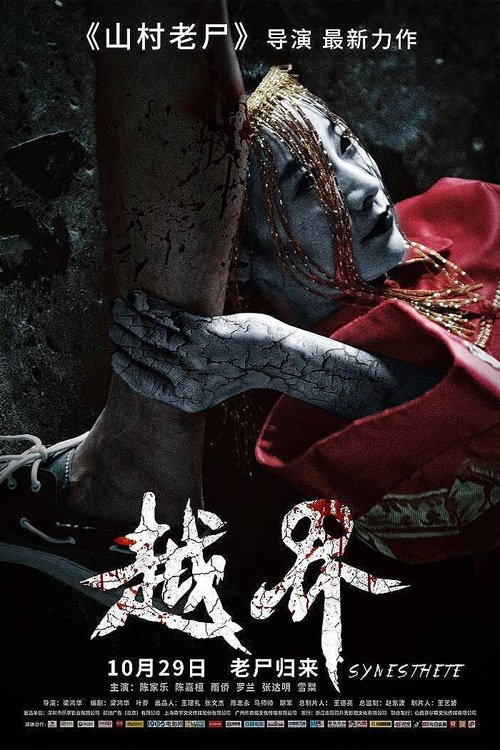
Synesthete
Plot
A photographer, Chi-Shing is entangled with a "woman in red", leading to the deaths of his relatives one by one. When the girl he likes, Sze Tung, also died mysteriously, Chi Shing vows to find out the truth but ends up revealing the secret of a "ghost marriage".
Get the Weekly Woke Watchlist
New and trending movies scored for woke bias, preachy messaging, and forced political themes — before you waste your evening.
No spam. One useful email per week.
Overall Series Review
Categorical Breakdown
The film features an entirely Chinese/Hong Kong cast and narrative, a natural reflection of its cultural origin. The plot does not engage with concepts of racial privilege, intersectional hierarchy, or the vilification of 'whiteness.' Characters are defined by their connection to the central curse, a supernatural syndrome (synesthesia), and family ties, upholding a meritocratic and character-driven focus.
The story grounds its horror in the local folk custom of 'ghost marriage,' directly engaging with and exploring a specific, centuries-old East Asian tradition. It respectfully utilizes a shaman and local spiritual elements. The narrative displays an interest in and a deep use of the home culture and its ancestral practices, which is the antithesis of civilizational self-hatred.
Female characters largely exist in relation to the male protagonist, either as the love interest, the deceased who drives the plot (the woman in red), or the professional assistant. The plot hinges on the male lead solving a problem and rescuing the women involved. There are no overt 'Girl Boss' or 'Mary Sue' tropes, and there is no messaging that disparages motherhood or family as a prison.
The core romantic and relational structure is traditional and heterosexual, centering on Chi-Shing's bond with Sze Tung. The central mystery of the 'ghost marriage' is inherently a traditional male-female pairing concept. There is no presentation or promotion of alternative sexual ideologies, deconstruction of the nuclear family, or lecturing on gender theory.
Traditional folk religion, specifically the concept of ghosts and the use of a shaman, is an integral and serious element of the plot, not a source of villainy or bigotry. The supernatural conflict inherently acknowledges a spiritual realm and cosmic forces, upholding the existence of a higher moral or metaphysical law without specific hostility toward religion.
Get the Weekly Woke Watchlist
New and trending movies scored for woke bias, preachy messaging, and forced political themes — before you waste your evening.
No spam. One useful email per week.