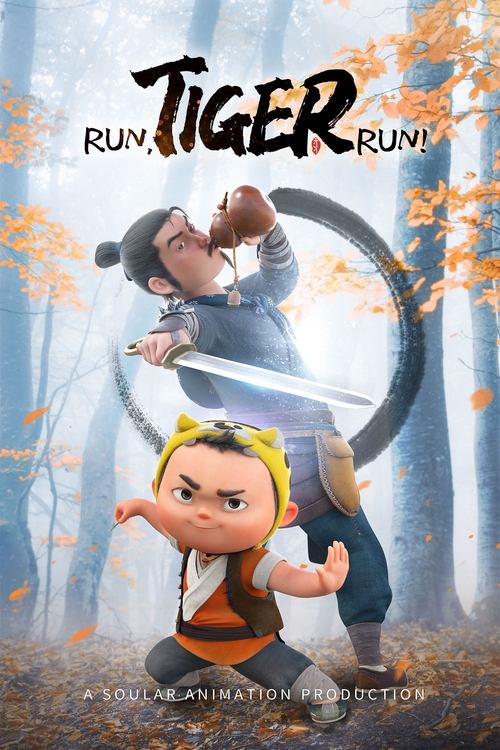
Run, Tiger Run!
Plot
The film follows a young boy who sets out on a mission to try and track down his long lost parents.
Get the Weekly Woke Watchlist
New and trending movies scored for woke bias, preachy messaging, and forced political themes — before you waste your evening.
No spam. One useful email per week.
Overall Series Review
Categorical Breakdown
The plot focuses entirely on the young orphan's desire to become a skilled professional, a *biaoshi*, to prove his worth. The narrative premise is one of Universal Meritocracy, as the main character seeks to shake off a negative bias through action and success. The film is a Chinese production featuring Chinese characters set in the Ming Dynasty, so themes of vilification of 'whiteness' or forced intersectional hierarchy are entirely absent.
The film is set in the historical Ming Dynasty and is specifically noted as a feature-length work 'epitomizing that cultural tradition,' which includes celebrating the historic profession of the *biaoshi*. The story is a tribute to its own nation's history and values. There is no content that expresses hostility toward the culture or ancestors it depicts, nor does it engage in any criticism of Western civilization.
The main dynamic is the partnership between the male orphan protagonist and his male mentor, a legendary swordsman. The story centers on a boy following in his parents' footsteps, which includes a traditional focus on the male hero's journey and a masculine ideal of protection (the Travelguard). The narrative does not provide detail on female characters to indicate a 'Girl Boss' or 'Mary Sue' trope, nor does it contain any anti-natalist or anti-family messaging, which keeps the score very low.
The story is a straightforward animated action-adventure for families, focusing on an orphan's journey and his relationship with a mentor. There is no information in the plot or commentary to suggest the presence of alternative sexualities, gender ideology, or a critique of the traditional family structure. The narrative operates within a Normative Structure as standard for this genre.
The core lessons of the film are loyalty, responsibility, and self-discovery, which establish an objective moral framework: the heroes who protect goods versus the bandits who steal them. There is no mention of or hostility toward any religion, including Christianity, nor does the narrative appear to embrace moral relativism as a philosophical driver for the plot.
Get the Weekly Woke Watchlist
New and trending movies scored for woke bias, preachy messaging, and forced political themes — before you waste your evening.
No spam. One useful email per week.