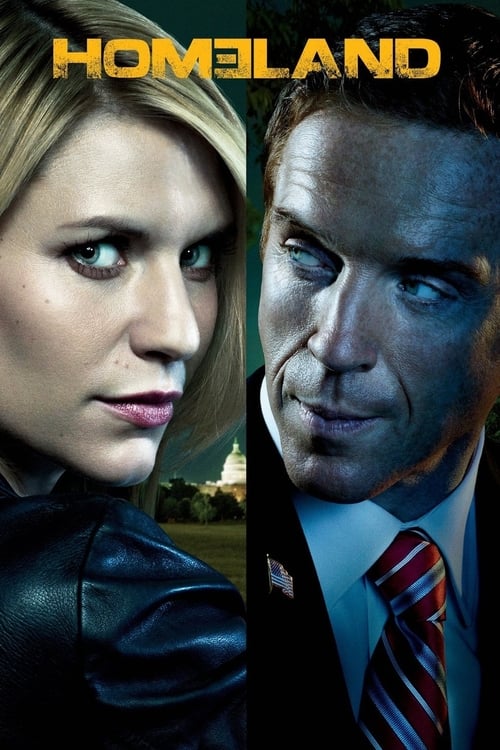
Homeland
Season 2 Analysis
Season Overview
Carrie continues her hunt for terrorist leader Abu Nazir while maintaining a complicated relationship with Brody that straddles the line between personal and professional. Brody is forced to work more closely with the CIA. Jessica Brody struggles to keep her family in tact despite increasing difficulty connecting with her husband. Saul discovers a clandestine plot.
Season Review
Categorical Breakdown
The main conflict is driven by political ideology and psychological damage rather than an intersectional hierarchy. Casting features diversity in high-level positions, such as the black Director of the CIA Counterterrorism Center, David Estes, but the characters’ roles and arcs are determined by merit and competence, not immutable characteristics. The narrative does not contain lectures on 'whiteness' or systemic privilege.
The season contains a strong thread of institutional self-critique, as high-ranking US government and CIA officials engage in morally dubious, illegal activities like the cover-up of civilian deaths, extrajudicial torture, and assassination plots against American citizens. This framing questions the fundamental morality of the 'home' civilization's institutions. However, the lead characters like Carrie and Saul maintain a fervent, protective patriotism for the nation itself and work to safeguard it from external terrorist enemies, which prevents the score from reaching a full civilizational self-hatred level.
Carrie Mathison is an intensely dedicated and highly competent female lead who consistently prioritizes her career, even over her personal relationships and the domestic life she briefly attempts to pursue. The show heavily implies that a woman in her position cannot 'have it all,' with the narrative validating professional fulfillment as the ultimate pursuit for the female protagonist. Men are complex and flawed (Brody as a turncoat/agent, Saul as a flawed but supportive mentor), but not broadly depicted as bumbling or toxic 'male bimbos.'
Alternative sexualities, gender identity, or queer theory are not present as narrative elements. The show focuses entirely on traditional male-female pairings and the dynamics of the nuclear family being destabilized by war and espionage.
The core antagonists are driven by radical political Islam, which links a specific religious ideology with terrorism and violence. However, the morality of the heroic US intelligence agents themselves is highly relativistic, with characters operating outside the law and contemplating assassination, suggesting that morality is subjective and defined by 'power dynamics' and expedience in the War on Terror. Traditional Western faith is mostly absent from the moral debate.