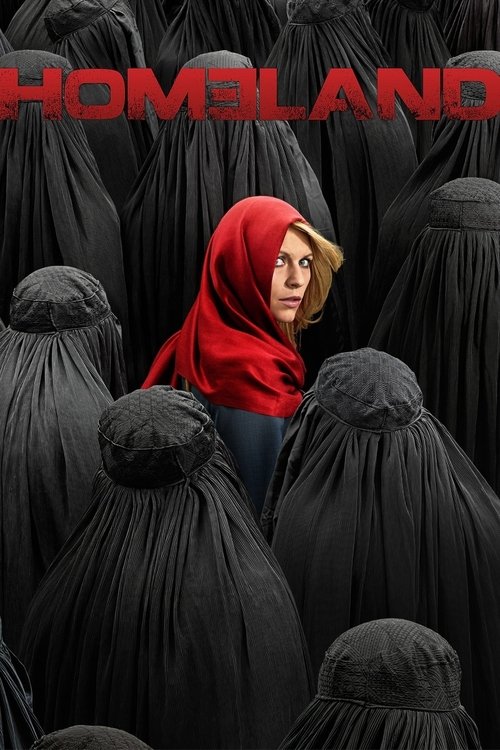
Homeland
Season 4 Analysis
Season Overview
Carrie's career at the CIA takes off when she becomes an overseas station chief in a highly volatile region, but every drone strike and tactical raid comes at a cost and she quickly learns the true price of power. Saul fights to stay in the intelligence game.
Season Review
Categorical Breakdown
The main conflict relies heavily on cultural and racial stereotyping, where the Western protagonists operate against an adversarial foreign culture, leading to criticisms of Islamophobia and a colonial framing of the central conflict. The show portrays a stark 'West vs. East' divide, with a narrative structure that depicts most foreign characters as either terrorists, intelligence collaborators, or passive victims who require Western intervention. However, the core plot is not driven by lecturing on white privilege or the vilification of whiteness within the American team.
American institutions, specifically the CIA and the US Embassy, are framed as deeply corrupt, incompetent, or compromised. The US Ambassador's husband is a pathetic, cuckolded traitor who leaks secrets, while a senior CIA official makes a brazen, moral-free deal with a terrorist who just orchestrated an attack on a US embassy. The narrative consistently portrays the Western establishment as fundamentally flawed and unworthy of trust.
Carrie Mathison is presented as the ultimate 'Girl Boss,' whose career success is directly tied to her total rejection of motherhood and traditional domestic life. She is cold, ruthless, and uses her sexuality as a calculated, non-emotional tool for manipulation ('The Girl Boss'). The primary male diplomatic figure in the season, the ambassador's husband, is depicted as weak, venal, and a pathetic traitor, which serves to emasculate the masculine role in the American diplomatic structure.
The season contains no discernible plot lines, characters, or ideological commentary related to alternative sexualities, gender theory, or the deconstruction of the nuclear family. The narrative focuses entirely on geopolitical espionage, war, and terrorism.
The primary antagonist's murderous ideology is explicitly and rhetorically linked to a literal, fundamentalist interpretation of a traditional holy book, with a character citing beheadings and crucifixions as being 'all in the book' they constantly read. The protagonists themselves operate in a purely secular, utilitarian moral framework, suggesting that a lack of transcendent morality guides the 'heroes,' while traditional religion guides the 'villains' to atrocity.