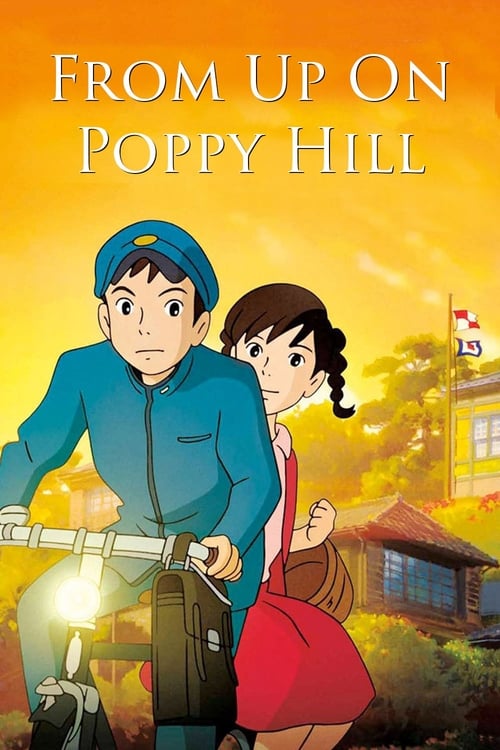
From Up on Poppy Hill
Plot
Yokohama, 1963. Japan is picking itself up from the devastation of World War II and preparing to host the 1964 Olympics—and the mood is one of both optimism and conflict as the young generation struggles to throw off the shackles of a troubled past. Against this backdrop of hope and change, a friendship begins to blossom between high school students Umi and Shun—but a buried secret from their past emerges to cast a shadow on the future and pull them apart.
Get the Weekly Woke Watchlist
New and trending movies scored for woke bias, preachy messaging, and forced political themes — before you waste your evening.
No spam. One useful email per week.
Overall Series Review
Categorical Breakdown
The movie is set in Japan and focuses entirely on Japanese characters, making the concept of 'race-swapping' or 'vilification of whiteness' irrelevant. Characters are judged solely by their character, work ethic, and sense of honor and responsibility, which aligns with a universal meritocracy. The plot is driven by a complicated personal history and a collective student effort, not by intersectional hierarchy or immutable characteristics.
The central conflict is the preservation of a historic school clubhouse, the 'Latin Quarter,' which serves as a metaphor for cultural heritage. The students actively fight against the government's impulse to tear down the old for the sake of 'modernization.' This directly champions the respect for the past and ancestral continuity, representing a stand for Chesterton’s Fence. The criticism is aimed at reckless change, not at Japanese civilization itself, which is portrayed with great affection and nostalgic detail.
The protagonist, Umi, is a highly capable and responsible young woman who capably runs her household and then takes a leading role in the school's preservation efforts. Her strength is portrayed as a grounded sense of duty and nurturing competence, not as a 'Mary Sue' or 'Girl Boss' trope that instantly perfects everything. The male lead, Shun, is a passionate activist and an honorable figure, not a bumbling or toxic male. The film celebrates the family unit and female domestic labor as a source of strength, not a 'prison.'
The narrative centers on a traditional, innocent male-female romantic relationship between Umi and Shun. The complication in their romance is a fear of accidental consanguinity due to a wartime secret, reinforcing a normative structure around family and pairing. The film contains no focus on alternative sexualities, deconstruction of the nuclear family, or lecturing on gender ideology.
Religion is not a central theme, but traditional Japanese cultural and spiritual practices are present. Umi raises nautical signal flags every morning as a personal ritual to remember her deceased sailor father, a motif that connects her to her family's ancestral past and the transcendent theme of duty. Her home contains a family shrine. The film does not feature anti-religious themes, nor does it present traditional religion as the root of evil, adhering to a non-combative, culturally authentic presentation of spirituality and morality.
Get the Weekly Woke Watchlist
New and trending movies scored for woke bias, preachy messaging, and forced political themes — before you waste your evening.
No spam. One useful email per week.