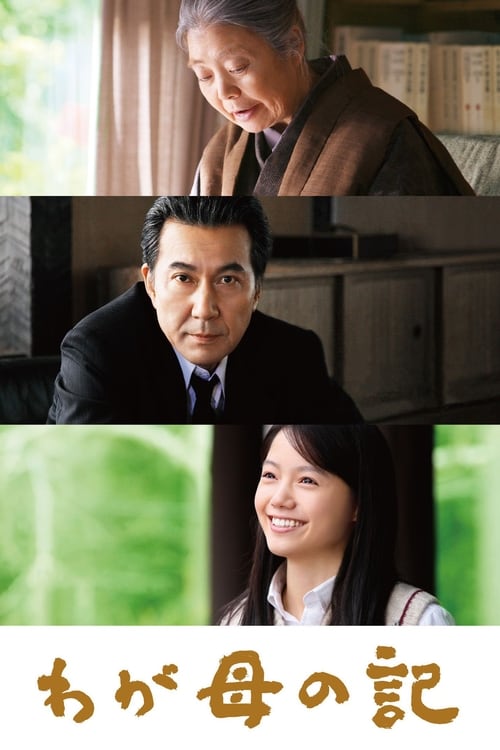
Chronicle of My Mother
Plot
Best-selling novelist Kosaku Igami has made a career out of using his family as fodder for his novels, much to their dismay. When his mother, the spirited family matriarch, is diagnosed with dementia, Igami must come to terms with the toll his own behavior has taken on his increasingly distant family and resolve his own long-simmering resentments. Evocative of classic Ozu, this gorgeously wrought epic family portrait explores the tenderness and trappings of familial bonds.
Get the Weekly Woke Watchlist
New and trending movies scored for woke bias, preachy messaging, and forced political themes — before you waste your evening.
No spam. One useful email per week.
Overall Series Review
Categorical Breakdown
The movie is a Japanese production focused on an ethnically homogenous Japanese family, which spans the 1950s through 1970s. The narrative centers on a personal, multi-generational family conflict and universal themes of aging and reconciliation. Character flaws and virtues are judged on individual merit and actions within the family structure. The plot contains no discussion of race, intersectional hierarchy, or the vilification of any ethnic group.
The director's approach is explicitly nostalgic for and celebrates traditional Japanese culture and family values, including the concept of filial piety. The film portrays Japanese institutions and the family unit as a source of strength and duty, not as fundamentally corrupt or racist. The movie is rooted in a specific Japanese cultural and spiritual context, showing gratitude for the ancestors and their cultural framework.
The core of the movie is a paean to motherhood and maternal devotion, despite the mother's complex past actions. The male protagonist is a successful, authoritative literary figure whose 'old-fashioned masculine authority' is presented with nostalgia. The women of the family, including the wife and daughters, support the family and the father's career, following a complementarian dynamic. The movie contains no 'Girl Boss' tropes or anti-natalist messages.
The narrative is strictly focused on a traditional nuclear family structure and the generational relationships between a father, mother, wife, and daughters. There is no presence of alternative sexual ideologies, gender theory, or messages aimed at deconstructing the male-female pairing or the nuclear family model. Sexuality is not a plot point or a central theme.
The film acknowledges the moral and spiritual laws of the culture it depicts, referencing concepts like the Buddhist-influenced reciprocity in Japanese relationships as a basis for conduct. The conflict resolution revolves around profound themes of duty, forgiveness, and unconditional love, which rely on a transcendent moral framework. The movie shows no hostility toward religion or promotion of moral relativism.
Get the Weekly Woke Watchlist
New and trending movies scored for woke bias, preachy messaging, and forced political themes — before you waste your evening.
No spam. One useful email per week.